Supreme Court Orders Swift Release of Detained Student Protesters, Seeks Independent Probe into Police Action
Digital Desk
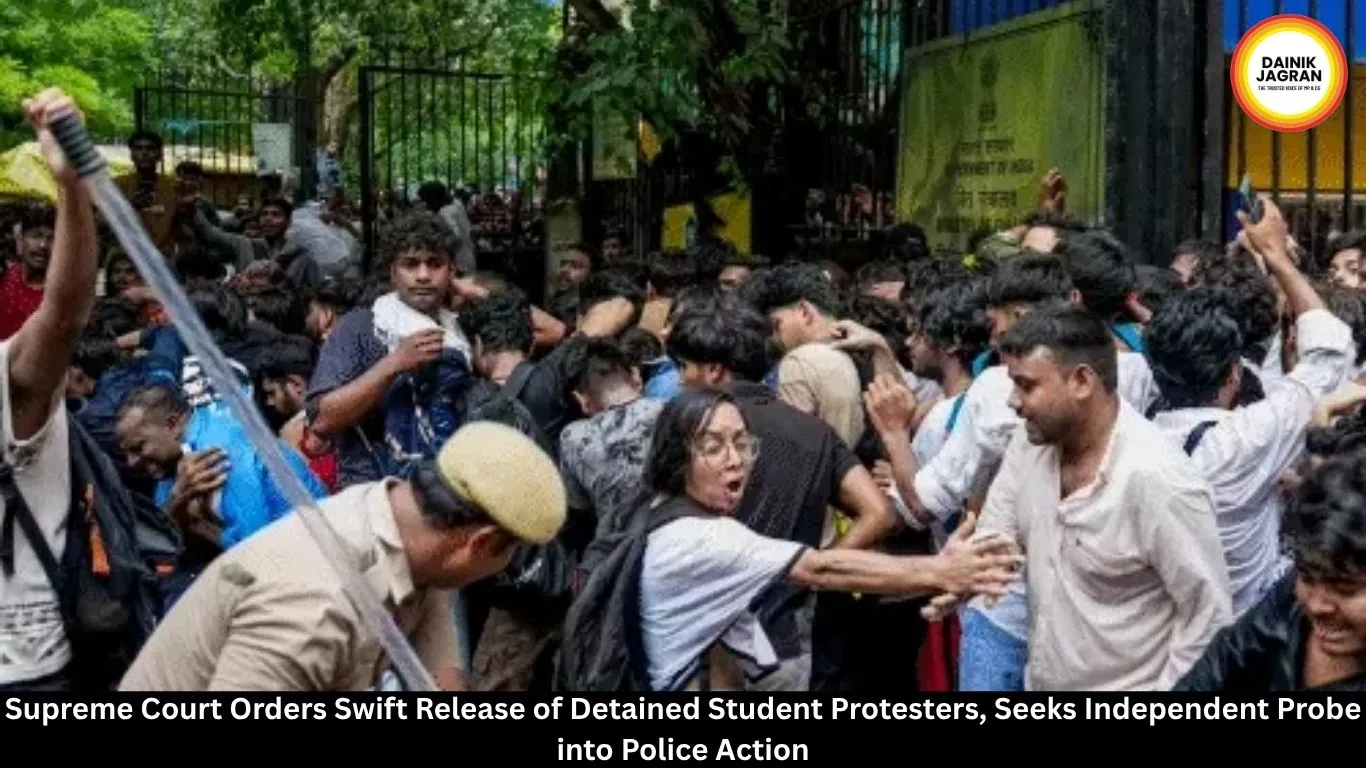
The Supreme Court on Tuesday ordered the immediate release of students detained during the 20 July Parliament March protests if they have no criminal record, while strongly affirming that peaceful protests are a constitutional right and an essential part of democracy.
Hearing a batch of petitions challenging the alleged use of excessive force by police during demonstrations led by the Cockroach Janta Party (CJP), a Bench headed by Chief Justice Surya Kant directed authorities across the country to preserve all CCTV footage, drone recordings, body-camera videos, wireless communication records, and PCR call logs related to the protests. The matter has been listed for further hearing on 3 August.
The court observed that the petitions raised serious allegations, including the use of pellet guns, tear gas, electric batons, lathi charges, and alleged assaults on students, women, journalists, and lawyers. It said these claims warranted an independent, evidence-based investigation.
Court Calls Protest a Democratic Right
The Bench emphasized that peaceful demonstrations are protected under the Constitution and said the time had come to revisit and update the Supreme Court's 2018 guidelines on police handling of protests. It also indicated that a nationwide protocol for policing demonstrations may be framed.
The court directed authorities not to take coercive action against peaceful student protesters and ordered that protesters' personal and digital data should neither be publicly disclosed nor used for surveillance pending further orders.
Release of Students Ordered
Among the key interim directions, the Supreme Court ordered the immediate release of detained students with no prior criminal history. It also directed states to release minors arrested during the protests if they had no criminal antecedents.
The court stressed that authorities must preserve all electronic and physical evidence to ensure a fair inquiry into allegations of police excesses.
Centre Supports Peaceful Protest, Seeks Accountability
Appearing for the Centre, Solicitor General Tushar Mehta told the court that students have every right to protest peacefully but maintained that anyone violating the law should face legal consequences.
He informed the Bench that nearly 250 police personnel were injured during the protests and cautioned against any action that could demoralize the police force. However, he also stated that he did not believe the students themselves were responsible for all instances of violence and suggested that anti-social elements may have infiltrated the demonstrations.
The Centre said it had no objection if the Supreme Court decided to constitute an independent inquiry committee and assured the Bench that all digital records and evidence were being preserved.
Allegations of Excessive Force
Senior advocates appearing for the petitioners alleged that police used disproportionate force against peaceful demonstrators. The petitions referred to the alleged use of pellet guns, electric shock batons, tear gas, and lathi charges, along with claims of assaults on women protesters and journalists.
One petition also alleged that an AK-47 rifle was deployed during a protest in Bihar, while another claimed that plain-clothes police personnel participated in the violence.
The petitioners sought an independent investigation into the incidents and safeguards against the use of protesters' digital data for surveillance.
Matter to Continue on August 3
The Supreme Court has posted the case for further hearing on 3 August, when it is expected to consider the framework for an independent inquiry and possible nationwide guidelines governing police response to public demonstrations.
The outcome of the proceedings could shape future protocols for balancing citizens' right to peaceful protest with law enforcement responsibilities across the country.
--------
🚨 Beat the News Rush – Join Now!
Get breaking alerts, hot exclusives, and game-changing stories instantly on your phone. No delays, no fluff – just the edge you need. ⚡
Tap to join:
🟢 WhatsApp Channel: Dainik Jagran MP CG
Crave more?
🅕 Facebook: Dainik Jagran MP CG English
🅧 Twitter (X): Dainik Jagran MP CG
🅘 Instagram: Dainik Jagran MP CG
Share the fire – keep your crew ahead! 🗞️🔥
Supreme Court Orders Swift Release of Detained Student Protesters, Seeks Independent Probe into Police Action
Digital Desk
Hearing a batch of petitions challenging the alleged use of excessive force by police during demonstrations led by the Cockroach Janta Party (CJP), a Bench headed by Chief Justice Surya Kant directed authorities across the country to preserve all CCTV footage, drone recordings, body-camera videos, wireless communication records, and PCR call logs related to the protests. The matter has been listed for further hearing on 3 August.
The court observed that the petitions raised serious allegations, including the use of pellet guns, tear gas, electric batons, lathi charges, and alleged assaults on students, women, journalists, and lawyers. It said these claims warranted an independent, evidence-based investigation.
Court Calls Protest a Democratic Right
The Bench emphasized that peaceful demonstrations are protected under the Constitution and said the time had come to revisit and update the Supreme Court's 2018 guidelines on police handling of protests. It also indicated that a nationwide protocol for policing demonstrations may be framed.
The court directed authorities not to take coercive action against peaceful student protesters and ordered that protesters' personal and digital data should neither be publicly disclosed nor used for surveillance pending further orders.
Release of Students Ordered
Among the key interim directions, the Supreme Court ordered the immediate release of detained students with no prior criminal history. It also directed states to release minors arrested during the protests if they had no criminal antecedents.
The court stressed that authorities must preserve all electronic and physical evidence to ensure a fair inquiry into allegations of police excesses.
Centre Supports Peaceful Protest, Seeks Accountability
Appearing for the Centre, Solicitor General Tushar Mehta told the court that students have every right to protest peacefully but maintained that anyone violating the law should face legal consequences.
He informed the Bench that nearly 250 police personnel were injured during the protests and cautioned against any action that could demoralize the police force. However, he also stated that he did not believe the students themselves were responsible for all instances of violence and suggested that anti-social elements may have infiltrated the demonstrations.
The Centre said it had no objection if the Supreme Court decided to constitute an independent inquiry committee and assured the Bench that all digital records and evidence were being preserved.
Allegations of Excessive Force
Senior advocates appearing for the petitioners alleged that police used disproportionate force against peaceful demonstrators. The petitions referred to the alleged use of pellet guns, electric shock batons, tear gas, and lathi charges, along with claims of assaults on women protesters and journalists.
One petition also alleged that an AK-47 rifle was deployed during a protest in Bihar, while another claimed that plain-clothes police personnel participated in the violence.
The petitioners sought an independent investigation into the incidents and safeguards against the use of protesters' digital data for surveillance.
Matter to Continue on August 3
The Supreme Court has posted the case for further hearing on 3 August, when it is expected to consider the framework for an independent inquiry and possible nationwide guidelines governing police response to public demonstrations.
The outcome of the proceedings could shape future protocols for balancing citizens' right to peaceful protest with law enforcement responsibilities across the country.