Beyond Exam Results: Reclaiming Childhood from the Coaching Hub Assembly Line

Digital desk

Beyond Exam Results: Reclaiming Childhood from the Coaching Hub Assembly Line

In India’s coaching hubs, childhood is increasingly being measured in test scores, ranks and admission lists. A child enters a classroom carrying a schoolbag and leaves carrying a much heavier burden: the expectation to outperform thousands of others.

The coaching industry has grown around a simple promise — work harder, study longer and success will follow. For millions of families, competitive examinations are seen as the safest route to a secure future. But somewhere between the mock tests, weekly rankings and endless study schedules, an uncomfortable question is being pushed aside: what happens to childhood when every waking hour is organised around an examination?

When Preparation Becomes a Lifestyle

Competitive examinations such as JEE and NEET demand discipline. There is nothing inherently wrong with coaching or rigorous preparation. The problem begins when preparation stops being one part of a young person's life and becomes the entire identity of that person.

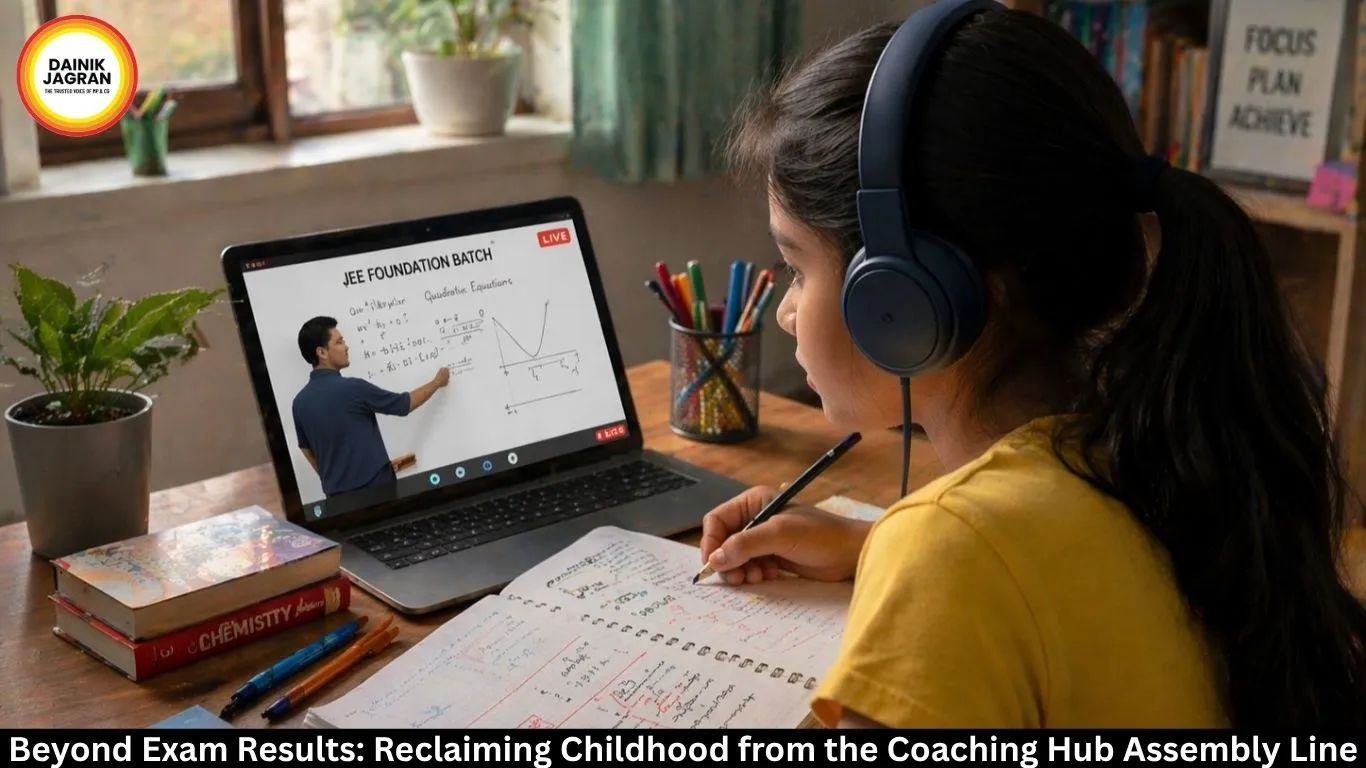
In major coaching centres, students often follow tightly structured routines. Classes occupy much of the day, followed by homework, practice papers, doubt sessions and tests. Weekends may offer little relief because they are frequently used for assessments or additional classes.

Also Read... Trump, Modi Will Resolve Russia Oil Tariff Row, Says US Adviser Peter Navarro

The logic is understandable: every extra hour is considered an advantage. But children are not machines whose output can simply be increased by extending operating hours.

Also Read... Rahul Gandhi Likely to Visit Ujjain in September, Mahakaleshwar Temple Visit Planned

The Price of Constant Competition

Academic pressure does not affect every student in the same way. Some thrive in competitive environments, while others struggle silently.

Also Read... Trump’s Gaza Peace Plan Remains ‘Operative’ Despite Netanyahu’s Objections, US-Backed Board Says

A low test score can become more than an academic setback. For a teenager who has been repeatedly told that an examination will determine the course of their life, failure can feel like personal rejection.

This is where families and institutions need to distinguish between healthy ambition and relentless pressure.

A child should be allowed to perform poorly in a test without believing that their future has collapsed. They should be able to change interests, discover new strengths and acknowledge exhaustion without being labelled as lacking commitment.

Coaching Hubs Need a Wider Definition of Success

The coaching ecosystem itself cannot be blamed for every problem. Parents, schools, universities, policymakers and society all contribute to the culture surrounding competitive examinations.

The deeper issue is the definition of success.

India has created an extraordinary social obsession with a handful of entrance examinations. A high rank can bring prestige, financial security and social approval. But this concentration of aspiration can make alternative career paths appear inferior, even when they may better suit an individual student's abilities.

A society that celebrates only the highest scorers eventually teaches children that anything below excellence is failure.

That is an unhealthy lesson.

Childhood Needs Space

There is also a practical dimension that deserves greater attention. Children need sleep, physical activity, friendships, family interaction and unstructured time. These are not distractions from development. They are part of development.

A teenager spending an afternoon playing football, reading something unrelated to the syllabus, learning music or simply talking with friends is not necessarily wasting time.

Education is supposed to prepare young people for life, not merely for a three-hour examination.

The pressure to optimise every hour has created a strange contradiction: parents want children to become successful adults, yet the process can deprive them of experiences that help build confidence, emotional resilience and independence.

Parents Must Rethink the Race

Parents understandably worry about their children's future. In a competitive economy, financial stability matters. Professional degrees can provide valuable opportunities.

But parental support should not become permanent performance monitoring.

Instead of asking only, "What rank did you get?", parents can ask, "What did you learn?", "Are you sleeping properly?", "What do you enjoy?" and, perhaps most importantly, "Are you okay?"

Those questions do not weaken ambition. They make ambition sustainable.

The Goal Should Be Bigger Than a Rank

India does need better educational outcomes and students who are prepared to compete globally. But educational success cannot be reduced to examination statistics.

The real challenge is to build an environment where children can pursue excellence without sacrificing their health, curiosity and sense of self.

Coaching can teach students how to solve difficult problems. Education should teach them how to navigate difficult lives.

The distinction matters.

A rank may open a college door, but childhood cannot be repeated after admission. If India's coaching hubs are to remain engines of opportunity, they must also leave room for the people they are preparing — not just the examination candidates they are training.

The question is no longer whether Indian students can study harder. It is whether we are willing to let them remain children while they prepare for adulthood.


 

Tags:
english.dainikjagranmpcg.com
10 Aug 2026 By Abhishek Joshi

Beyond Exam Results: Reclaiming Childhood from the Coaching Hub Assembly Line

Digital desk

The coaching industry has grown around a simple promise — work harder, study longer and success will follow. For millions of families, competitive examinations are seen as the safest route to a secure future. But somewhere between the mock tests, weekly rankings and endless study schedules, an uncomfortable question is being pushed aside: what happens to childhood when every waking hour is organised around an examination?

When Preparation Becomes a Lifestyle

Competitive examinations such as JEE and NEET demand discipline. There is nothing inherently wrong with coaching or rigorous preparation. The problem begins when preparation stops being one part of a young person's life and becomes the entire identity of that person.

In major coaching centres, students often follow tightly structured routines. Classes occupy much of the day, followed by homework, practice papers, doubt sessions and tests. Weekends may offer little relief because they are frequently used for assessments or additional classes.

The logic is understandable: every extra hour is considered an advantage. But children are not machines whose output can simply be increased by extending operating hours.

The Price of Constant Competition

Academic pressure does not affect every student in the same way. Some thrive in competitive environments, while others struggle silently.

A low test score can become more than an academic setback. For a teenager who has been repeatedly told that an examination will determine the course of their life, failure can feel like personal rejection.

This is where families and institutions need to distinguish between healthy ambition and relentless pressure.

A child should be allowed to perform poorly in a test without believing that their future has collapsed. They should be able to change interests, discover new strengths and acknowledge exhaustion without being labelled as lacking commitment.

Coaching Hubs Need a Wider Definition of Success

The coaching ecosystem itself cannot be blamed for every problem. Parents, schools, universities, policymakers and society all contribute to the culture surrounding competitive examinations.

The deeper issue is the definition of success.

India has created an extraordinary social obsession with a handful of entrance examinations. A high rank can bring prestige, financial security and social approval. But this concentration of aspiration can make alternative career paths appear inferior, even when they may better suit an individual student's abilities.

A society that celebrates only the highest scorers eventually teaches children that anything below excellence is failure.

That is an unhealthy lesson.

Childhood Needs Space

There is also a practical dimension that deserves greater attention. Children need sleep, physical activity, friendships, family interaction and unstructured time. These are not distractions from development. They are part of development.

A teenager spending an afternoon playing football, reading something unrelated to the syllabus, learning music or simply talking with friends is not necessarily wasting time.

Education is supposed to prepare young people for life, not merely for a three-hour examination.

The pressure to optimise every hour has created a strange contradiction: parents want children to become successful adults, yet the process can deprive them of experiences that help build confidence, emotional resilience and independence.

Parents Must Rethink the Race

Parents understandably worry about their children's future. In a competitive economy, financial stability matters. Professional degrees can provide valuable opportunities.

But parental support should not become permanent performance monitoring.

Instead of asking only, "What rank did you get?", parents can ask, "What did you learn?", "Are you sleeping properly?", "What do you enjoy?" and, perhaps most importantly, "Are you okay?"

Those questions do not weaken ambition. They make ambition sustainable.

The Goal Should Be Bigger Than a Rank

India does need better educational outcomes and students who are prepared to compete globally. But educational success cannot be reduced to examination statistics.

The real challenge is to build an environment where children can pursue excellence without sacrificing their health, curiosity and sense of self.

Coaching can teach students how to solve difficult problems. Education should teach them how to navigate difficult lives.

The distinction matters.

A rank may open a college door, but childhood cannot be repeated after admission. If India's coaching hubs are to remain engines of opportunity, they must also leave room for the people they are preparing — not just the examination candidates they are training.

The question is no longer whether Indian students can study harder. It is whether we are willing to let them remain children while they prepare for adulthood.

 

https://english.dainikjagranmpcg.com/opinion/beyond-exam-results-reclaiming-childhood-from-the-coaching-hub-assembly/article-25424

--------

🚨 Beat the News Rush – Join Now!

Get breaking alerts, hot exclusives, and game-changing stories instantly on your phone. No delays, no fluff – just the edge you need. ⚡

Tap to join: 

🟢 WhatsApp Channel: Dainik Jagran MP CG

Crave more?

🅕 Facebook: Dainik Jagran MP CG English

🅧 Twitter (X): Dainik Jagran MP CG

🅘 Instagram: Dainik Jagran MP CG

Share the fire – keep your crew ahead! 🗞️🔥

Trending News