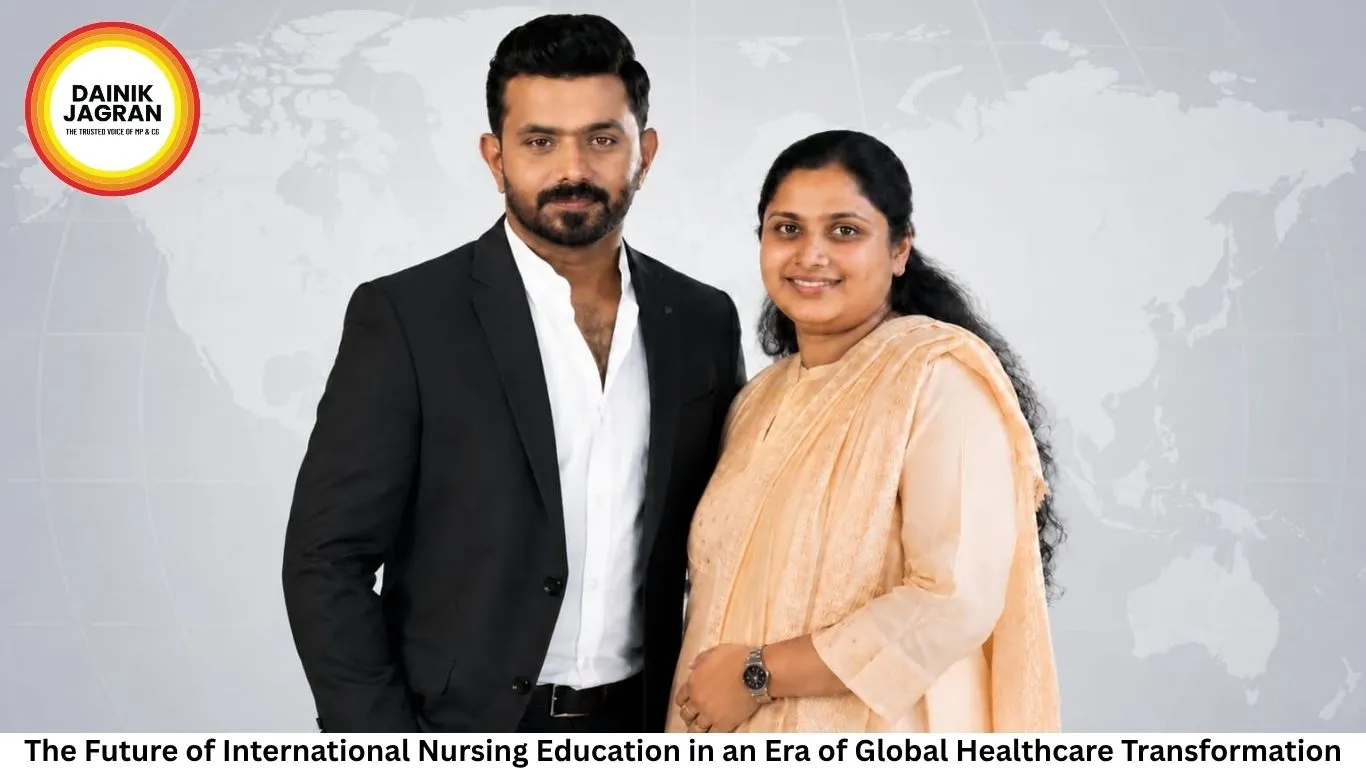
The Future of International Nursing Education in an Era of Global Healthcare Transformation

Rishita Sharma

The Future of International Nursing Education in an Era of Global Healthcare Transformation

The global healthcare sector is entering a period of unprecedented transformation. Advances in medical technology, demographic shifts, changing disease patterns, workforce shortages, and rising patient expectations are collectively reshaping healthcare systems across the world. Amid these changes, one profession remains central to the delivery of safe, effective, and compassionate care: nursing.

While healthcare debates often focus on infrastructure, policy reforms, artificial intelligence, and medical innovation, the future success of healthcare systems will depend significantly on the quality of nursing education. The way nurses are trained today will directly influence patient outcomes, workforce readiness, healthcare efficiency, and public trust in the years ahead.

As healthcare evolves, so too must the educational systems responsible for preparing the next generation of nursing professionals.

For decades, nursing education followed relatively predictable models. Students acquired theoretical knowledge, completed clinical placements, and demonstrated competency through examinations and supervised practice. This framework successfully prepared millions of healthcare professionals worldwide.

However, modern healthcare environments are considerably more complex than those of previous generations.

Today's nurses manage patients with multiple chronic conditions, advanced treatment plans, sophisticated medical technologies, and rapidly changing clinical needs. They work within multidisciplinary teams, navigate electronic health records, coordinate care across various settings, and frequently serve as the primary point of contact for patients and families.

These realities demand competencies that extend beyond technical knowledge.

Healthcare organizations increasingly seek professionals who can think critically, communicate effectively, adapt to change, demonstrate cultural awareness, and make sound clinical decisions under pressure. Consequently, nursing education is experiencing a global shift toward competency-based learning models that emphasize practical application alongside academic knowledge.

One of the most important developments in contemporary nursing education is the growing emphasis on clinical reasoning.

Clinical reasoning refers to the cognitive process through which healthcare professionals collect information, interpret clinical findings, identify priorities, evaluate options, and determine appropriate interventions. It represents a critical bridge between theoretical knowledge and practical patient care.

In modern healthcare environments, nurses frequently encounter situations that require immediate judgment. A patient's condition may deteriorate unexpectedly. A medication order may appear inconsistent with clinical findings. A family member's concerns may reveal an emerging complication.

In such situations, the ability to think critically becomes just as important as technical competence.

Recognizing this reality, educational institutions worldwide are redesigning curricula to strengthen decision-making, prioritization, and problem-solving abilities among future healthcare professionals.

Another significant trend shaping nursing education is the expansion of simulation-based learning.

Simulation technologies now allow students to engage in realistic clinical scenarios without compromising patient safety. High-fidelity simulation laboratories can replicate emergency situations, critical care environments, medication administration challenges, and complex patient interactions.

These experiences provide learners with opportunities to develop confidence, teamwork, communication skills, and clinical judgment before entering real healthcare settings.

Educational experts increasingly view simulation not as a supplementary tool but as an essential component of professional preparation.

Technology is also transforming the educational landscape.

Artificial intelligence, virtual learning environments, digital assessment platforms, electronic health records, telehealth systems, and data-driven educational tools are becoming increasingly integrated into healthcare education. These technologies create opportunities for personalized learning, improved accessibility, and enhanced skill development.

However, the integration of technology presents both opportunities and challenges.

Healthcare professionals must learn to utilize technological tools effectively while maintaining patient-centered care. They must understand how to evaluate information critically rather than relying solely on automated systems.

The future nurse will therefore require both technological literacy and human judgment.

Despite remarkable advances in healthcare technology, the profession continues to depend upon qualities that cannot be automated. Empathy, ethical decision-making, communication, compassion, leadership, and clinical reasoning remain fundamentally human competencies.

The challenge for educators is to balance technological innovation with the development of these essential professional attributes.

Global workforce trends further highlight the importance of educational transformation.

Many countries are currently experiencing significant nursing shortages. Ageing populations, increasing healthcare utilization, and workforce retirements are placing unprecedented pressure on healthcare systems. Governments and healthcare organizations are investing heavily in recruitment, retention, and workforce development initiatives. In this environment, internationally educated nurses play an increasingly important role.

Countries such as the United States, Canada, Australia, the United Kingdom, and numerous European nations continue to depend on internationally trained healthcare professionals to support healthcare delivery. As a result, nursing education is becoming increasingly globalized.

Educational institutions are no longer preparing students exclusively for local healthcare environments. They are preparing professionals who may ultimately practice within diverse healthcare systems around the world.

India occupies a particularly important position within this global workforce landscape.For decades, Indian nurses have contributed significantly to healthcare systems across multiple continents. Their clinical competence, adaptability, and professional commitment have earned widespread recognition.

Among Indian states, Kerala has played a particularly influential role.

The state's longstanding emphasis on education, healthcare training, and professional development has contributed to its reputation as a major source of nursing talent. Nurses from Kerala continue to serve in hospitals, long-term care facilities, community health settings, and specialized healthcare institutions throughout the world.

Maintaining this reputation requires continuous adaptation to evolving international standards.

Educational institutions and professional educators must remain responsive to changing workforce expectations, technological developments, and healthcare priorities.

Across Kerala, numerous initiatives are focused on strengthening professional readiness among nursing candidates. These efforts increasingly emphasize clinical judgment, communication skills, evidence-based practice, patient safety, and lifelong learning.

Among the educators contributing to this evolving educational environment are Ainstin S Dennis and Tincy Mathew. Through their work with Medline Academy, they have advocated structured educational approaches that encourage understanding, application, and critical thinking rather than rote memorization.

Their educational philosophy reflects broader international trends that prioritize competence, adaptability, and professional readiness.

This alignment between local educational initiatives and global workforce expectations illustrates an important reality: nursing education can no longer be viewed solely through a local lens. Healthcare has become increasingly interconnected, and educational systems must prepare professionals accordingly.

Looking ahead, several factors are likely to influence the future direction of nursing education.

Artificial intelligence will continue supporting clinical practice and educational delivery.

Simulation technologies will become increasingly sophisticated.

Interprofessional education will gain greater importance as healthcare teams become more integrated.

Personalized learning models will allow educators to tailor instruction to individual learner needs.

Evidence-based practice will continue serving as a cornerstone of professional decision-making.

At the same time, demographic changes and workforce shortages will reinforce the need for highly competent healthcare professionals capable of functioning effectively in diverse clinical environments.

These developments suggest that the future of nursing education will be defined not by a single innovation but by a combination of technological advancement, educational reform, and professional adaptation.

Ultimately, the purpose of nursing education remains unchanged: preparing professionals capable of delivering safe, effective, and compassionate patient care.

What is changing is the pathway toward that objective.

The healthcare systems of tomorrow will require nurses who are not only knowledgeable but also analytical, adaptable, technologically proficient, and committed to lifelong learning. Educational institutions that successfully cultivate these competencies will play a critical role in shaping the future healthcare workforce.

As healthcare continues to evolve, the importance of nursing education will only increase. The decisions made by educators, institutions, and policymakers today will influence healthcare outcomes for decades to come.

In many respects, the future of global healthcare will depend upon how effectively the next generation of nurses is prepared to meet the challenges of an increasingly complex world.


--------

🚨 Beat the News Rush – Join Now!

Get breaking alerts, hot exclusives, and game-changing stories instantly on your phone. No delays, no fluff – just the edge you need. ⚡

Tap to join: 

🟢 WhatsApp Channel: Dainik Jagran MP CG

Crave more?

🅕 Facebook: Dainik Jagran MP CG English

🅧 Twitter (X): Dainik Jagran MP CG

🅘 Instagram: Dainik Jagran MP CG

Share the fire – keep your crew ahead! 🗞️🔥

english.dainikjagranmpcg.com
13 Jun 2026 By Rishita

The Future of International Nursing Education in an Era of Global Healthcare Transformation

Rishita Sharma

While healthcare debates often focus on infrastructure, policy reforms, artificial intelligence, and medical innovation, the future success of healthcare systems will depend significantly on the quality of nursing education. The way nurses are trained today will directly influence patient outcomes, workforce readiness, healthcare efficiency, and public trust in the years ahead.

As healthcare evolves, so too must the educational systems responsible for preparing the next generation of nursing professionals.

For decades, nursing education followed relatively predictable models. Students acquired theoretical knowledge, completed clinical placements, and demonstrated competency through examinations and supervised practice. This framework successfully prepared millions of healthcare professionals worldwide.

However, modern healthcare environments are considerably more complex than those of previous generations.

Today's nurses manage patients with multiple chronic conditions, advanced treatment plans, sophisticated medical technologies, and rapidly changing clinical needs. They work within multidisciplinary teams, navigate electronic health records, coordinate care across various settings, and frequently serve as the primary point of contact for patients and families.

These realities demand competencies that extend beyond technical knowledge.

Healthcare organizations increasingly seek professionals who can think critically, communicate effectively, adapt to change, demonstrate cultural awareness, and make sound clinical decisions under pressure. Consequently, nursing education is experiencing a global shift toward competency-based learning models that emphasize practical application alongside academic knowledge.

One of the most important developments in contemporary nursing education is the growing emphasis on clinical reasoning.

Clinical reasoning refers to the cognitive process through which healthcare professionals collect information, interpret clinical findings, identify priorities, evaluate options, and determine appropriate interventions. It represents a critical bridge between theoretical knowledge and practical patient care.

In modern healthcare environments, nurses frequently encounter situations that require immediate judgment. A patient's condition may deteriorate unexpectedly. A medication order may appear inconsistent with clinical findings. A family member's concerns may reveal an emerging complication.

In such situations, the ability to think critically becomes just as important as technical competence.

Recognizing this reality, educational institutions worldwide are redesigning curricula to strengthen decision-making, prioritization, and problem-solving abilities among future healthcare professionals.

Another significant trend shaping nursing education is the expansion of simulation-based learning.

Simulation technologies now allow students to engage in realistic clinical scenarios without compromising patient safety. High-fidelity simulation laboratories can replicate emergency situations, critical care environments, medication administration challenges, and complex patient interactions.

These experiences provide learners with opportunities to develop confidence, teamwork, communication skills, and clinical judgment before entering real healthcare settings.

Educational experts increasingly view simulation not as a supplementary tool but as an essential component of professional preparation.

Technology is also transforming the educational landscape.

Artificial intelligence, virtual learning environments, digital assessment platforms, electronic health records, telehealth systems, and data-driven educational tools are becoming increasingly integrated into healthcare education. These technologies create opportunities for personalized learning, improved accessibility, and enhanced skill development.

However, the integration of technology presents both opportunities and challenges.

Healthcare professionals must learn to utilize technological tools effectively while maintaining patient-centered care. They must understand how to evaluate information critically rather than relying solely on automated systems.

The future nurse will therefore require both technological literacy and human judgment.

Despite remarkable advances in healthcare technology, the profession continues to depend upon qualities that cannot be automated. Empathy, ethical decision-making, communication, compassion, leadership, and clinical reasoning remain fundamentally human competencies.

The challenge for educators is to balance technological innovation with the development of these essential professional attributes.

Global workforce trends further highlight the importance of educational transformation.

Many countries are currently experiencing significant nursing shortages. Ageing populations, increasing healthcare utilization, and workforce retirements are placing unprecedented pressure on healthcare systems. Governments and healthcare organizations are investing heavily in recruitment, retention, and workforce development initiatives. In this environment, internationally educated nurses play an increasingly important role.

Countries such as the United States, Canada, Australia, the United Kingdom, and numerous European nations continue to depend on internationally trained healthcare professionals to support healthcare delivery. As a result, nursing education is becoming increasingly globalized.

Educational institutions are no longer preparing students exclusively for local healthcare environments. They are preparing professionals who may ultimately practice within diverse healthcare systems around the world.

India occupies a particularly important position within this global workforce landscape.For decades, Indian nurses have contributed significantly to healthcare systems across multiple continents. Their clinical competence, adaptability, and professional commitment have earned widespread recognition.

Among Indian states, Kerala has played a particularly influential role.

The state's longstanding emphasis on education, healthcare training, and professional development has contributed to its reputation as a major source of nursing talent. Nurses from Kerala continue to serve in hospitals, long-term care facilities, community health settings, and specialized healthcare institutions throughout the world.

Maintaining this reputation requires continuous adaptation to evolving international standards.

Educational institutions and professional educators must remain responsive to changing workforce expectations, technological developments, and healthcare priorities.

Across Kerala, numerous initiatives are focused on strengthening professional readiness among nursing candidates. These efforts increasingly emphasize clinical judgment, communication skills, evidence-based practice, patient safety, and lifelong learning.

Among the educators contributing to this evolving educational environment are Ainstin S Dennis and Tincy Mathew. Through their work with Medline Academy, they have advocated structured educational approaches that encourage understanding, application, and critical thinking rather than rote memorization.

Their educational philosophy reflects broader international trends that prioritize competence, adaptability, and professional readiness.

This alignment between local educational initiatives and global workforce expectations illustrates an important reality: nursing education can no longer be viewed solely through a local lens. Healthcare has become increasingly interconnected, and educational systems must prepare professionals accordingly.

Looking ahead, several factors are likely to influence the future direction of nursing education.

Artificial intelligence will continue supporting clinical practice and educational delivery.

Simulation technologies will become increasingly sophisticated.

Interprofessional education will gain greater importance as healthcare teams become more integrated.

Personalized learning models will allow educators to tailor instruction to individual learner needs.

Evidence-based practice will continue serving as a cornerstone of professional decision-making.

At the same time, demographic changes and workforce shortages will reinforce the need for highly competent healthcare professionals capable of functioning effectively in diverse clinical environments.

These developments suggest that the future of nursing education will be defined not by a single innovation but by a combination of technological advancement, educational reform, and professional adaptation.

Ultimately, the purpose of nursing education remains unchanged: preparing professionals capable of delivering safe, effective, and compassionate patient care.

What is changing is the pathway toward that objective.

The healthcare systems of tomorrow will require nurses who are not only knowledgeable but also analytical, adaptable, technologically proficient, and committed to lifelong learning. Educational institutions that successfully cultivate these competencies will play a critical role in shaping the future healthcare workforce.

As healthcare continues to evolve, the importance of nursing education will only increase. The decisions made by educators, institutions, and policymakers today will influence healthcare outcomes for decades to come.

In many respects, the future of global healthcare will depend upon how effectively the next generation of nurses is prepared to meet the challenges of an increasingly complex world.

https://english.dainikjagranmpcg.com/opinion/the-future-of-international-nursing-education-in-an-era-of/article-20074
Tags:

Latest News