Industrial Corridor in MP: Can It Really Create Jobs in Madhya Pradesh?
Digital desk
What is an industrial corridor and can it create jobs in Madhya Pradesh? Know how the Indore-Pithampur Economic Corridor could boost investment, manufacturing and employment.
Madhya Pradesh is stepping up its industrial and infrastructure push with new economic corridors, improved connectivity and plans aimed at attracting manufacturing and logistics investments. One of the most prominent projects is the Indore–Pithampur Economic Corridor, whose first phase has been launched with an estimated investment of ₹2,360 crore.
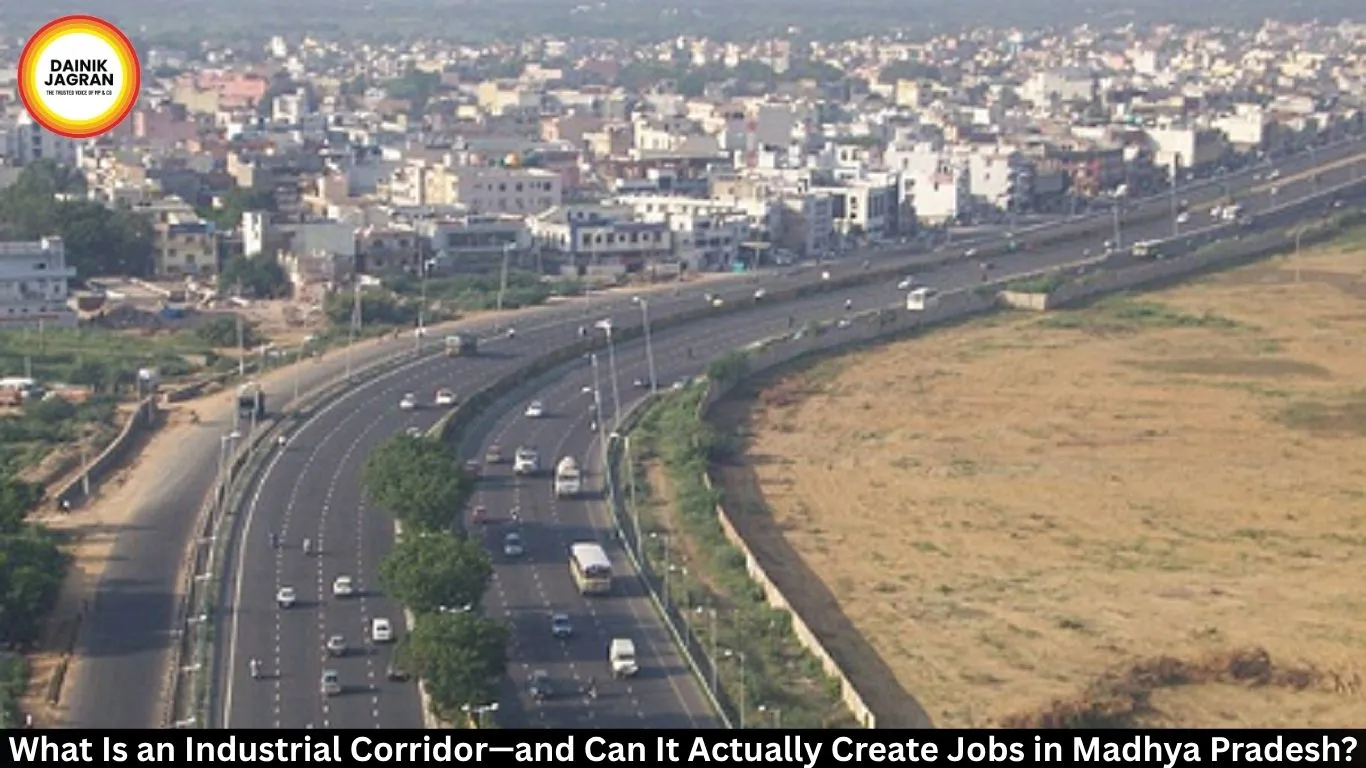
The 20.28-km corridor is expected to connect Indore’s Super Corridor with the Pithampur industrial area and improve the movement of people and goods between two of Madhya Pradesh’s important economic centres. The state government has projected that the project could generate around 6 lakh employment opportunities over time.
But what exactly is an industrial corridor, and does building one automatically mean thousands of new jobs?
What is an industrial corridor?
An industrial corridor is not simply a large road connecting two cities.
It is a planned economic zone where roads, railways, logistics facilities, power, water, industrial land and other infrastructure are developed together to make it easier for companies to establish factories and businesses.
At the national level, India is developing industrial corridors under the National Industrial Corridor Development Programme (NICDP). The Centre says projects under 11 industrial corridors are currently being implemented, with the objective of creating modern manufacturing hubs, multimodal connectivity and plug-and-play industrial infrastructure.
For Madhya Pradesh, this model is particularly significant because of the state's central location and existing industrial clusters.
Why is MP focusing on corridors?
Madhya Pradesh already has established industrial centres such as Pithampur, Indore, Dewas and Ujjain. The state is also connected to major national transport routes.
The state's industrial investment strategy includes areas linked to the Delhi-Mumbai Industrial Corridor, along with other proposed investment corridors. The state government has highlighted connectivity, industrial land availability and infrastructure as key factors for attracting companies.
The logic is straightforward: better connectivity can reduce transportation time and logistics costs, making it easier for manufacturers to bring in raw materials and send finished products to markets.
How can corridors create jobs?
The first layer is construction employment.
Large roads, bridges, industrial parks, warehouses and utilities require engineers, drivers, construction workers, technicians and other workers during the development phase.
The bigger employment impact, however, is expected to come after industries move in.
Factories can create direct jobs in manufacturing, while logistics companies, warehouses, transport operators, maintenance firms, food businesses and other service providers can create additional employment.
Existing industrial development around Pithampur illustrates this ecosystem effect. A state-linked industrial information source says the Pithampur SEZ has around 50 industrial units and approximately 16,000 jobs.
Will 6 lakh jobs actually be created?
This is where the headline numbers need to be treated carefully.
The 6-lakh figure is a projected employment opportunity associated with the Indore–Pithampur Economic Corridor, rather than a guarantee that six lakh people will immediately receive permanent jobs.
Actual employment will depend on how quickly industrial land is developed, how many companies establish operations, the size of investments, the sectors involved and whether local workers have the required skills.
There is also an important distinction between direct and indirect employment. A new manufacturing unit may employ a limited number of people directly but support many more jobs through suppliers, transport, maintenance, retail and other services.
Infrastructure alone is not enough
A corridor can provide roads and industrial land, but companies ultimately need reliable electricity, water, skilled workers, clearances, logistics facilities and access to markets.
The Centre itself has stressed the need for faster completion of industrial-corridor infrastructure, land allotment, investment and production.
For MP, the challenge will therefore be to convert infrastructure announcements and investment proposals into operational factories and businesses.
What could it mean for MP workers?
If the projects attract substantial manufacturing and logistics investment, employment opportunities could expand not only in Indore and Pithampur but also in surrounding districts.
However, the quality of employment will depend heavily on skill development. Jobs in modern manufacturing, automation, logistics and technology increasingly require specialised training.
This means industrial corridors could become a bigger employment engine for Madhya Pradesh—but only if infrastructure development is accompanied by investment, production and workforce training.
The bigger picture
Madhya Pradesh's industrial strategy is increasingly moving towards connecting infrastructure with manufacturing and logistics. The proposed Indore–Pithampur corridor is one example of this approach, while broader national industrial-corridor programmes are designed to create integrated manufacturing ecosystems.
So, can an industrial corridor create jobs? Yes—but a road alone cannot.
The real test will be how many industries actually set up operations, how much production begins, how many local people are hired and whether the promised investment translates into long-term economic activity.

Industrial Corridor in MP: Can It Really Create Jobs in Madhya Pradesh?
Digital desk
Madhya Pradesh is stepping up its industrial and infrastructure push with new economic corridors, improved connectivity and plans aimed at attracting manufacturing and logistics investments. One of the most prominent projects is the Indore–Pithampur Economic Corridor, whose first phase has been launched with an estimated investment of ₹2,360 crore.
The 20.28-km corridor is expected to connect Indore’s Super Corridor with the Pithampur industrial area and improve the movement of people and goods between two of Madhya Pradesh’s important economic centres. The state government has projected that the project could generate around 6 lakh employment opportunities over time.
But what exactly is an industrial corridor, and does building one automatically mean thousands of new jobs?
What is an industrial corridor?
An industrial corridor is not simply a large road connecting two cities.
It is a planned economic zone where roads, railways, logistics facilities, power, water, industrial land and other infrastructure are developed together to make it easier for companies to establish factories and businesses.
At the national level, India is developing industrial corridors under the National Industrial Corridor Development Programme (NICDP). The Centre says projects under 11 industrial corridors are currently being implemented, with the objective of creating modern manufacturing hubs, multimodal connectivity and plug-and-play industrial infrastructure.
For Madhya Pradesh, this model is particularly significant because of the state's central location and existing industrial clusters.
Why is MP focusing on corridors?
Madhya Pradesh already has established industrial centres such as Pithampur, Indore, Dewas and Ujjain. The state is also connected to major national transport routes.
The state's industrial investment strategy includes areas linked to the Delhi-Mumbai Industrial Corridor, along with other proposed investment corridors. The state government has highlighted connectivity, industrial land availability and infrastructure as key factors for attracting companies.
The logic is straightforward: better connectivity can reduce transportation time and logistics costs, making it easier for manufacturers to bring in raw materials and send finished products to markets.
How can corridors create jobs?
The first layer is construction employment.
Large roads, bridges, industrial parks, warehouses and utilities require engineers, drivers, construction workers, technicians and other workers during the development phase.
The bigger employment impact, however, is expected to come after industries move in.
Factories can create direct jobs in manufacturing, while logistics companies, warehouses, transport operators, maintenance firms, food businesses and other service providers can create additional employment.
Existing industrial development around Pithampur illustrates this ecosystem effect. A state-linked industrial information source says the Pithampur SEZ has around 50 industrial units and approximately 16,000 jobs.
Will 6 lakh jobs actually be created?
This is where the headline numbers need to be treated carefully.
The 6-lakh figure is a projected employment opportunity associated with the Indore–Pithampur Economic Corridor, rather than a guarantee that six lakh people will immediately receive permanent jobs.
Actual employment will depend on how quickly industrial land is developed, how many companies establish operations, the size of investments, the sectors involved and whether local workers have the required skills.
There is also an important distinction between direct and indirect employment. A new manufacturing unit may employ a limited number of people directly but support many more jobs through suppliers, transport, maintenance, retail and other services.
Infrastructure alone is not enough
A corridor can provide roads and industrial land, but companies ultimately need reliable electricity, water, skilled workers, clearances, logistics facilities and access to markets.
The Centre itself has stressed the need for faster completion of industrial-corridor infrastructure, land allotment, investment and production.
For MP, the challenge will therefore be to convert infrastructure announcements and investment proposals into operational factories and businesses.
What could it mean for MP workers?
If the projects attract substantial manufacturing and logistics investment, employment opportunities could expand not only in Indore and Pithampur but also in surrounding districts.
However, the quality of employment will depend heavily on skill development. Jobs in modern manufacturing, automation, logistics and technology increasingly require specialised training.
This means industrial corridors could become a bigger employment engine for Madhya Pradesh—but only if infrastructure development is accompanied by investment, production and workforce training.
The bigger picture
Madhya Pradesh's industrial strategy is increasingly moving towards connecting infrastructure with manufacturing and logistics. The proposed Indore–Pithampur corridor is one example of this approach, while broader national industrial-corridor programmes are designed to create integrated manufacturing ecosystems.
So, can an industrial corridor create jobs? Yes—but a road alone cannot.
The real test will be how many industries actually set up operations, how much production begins, how many local people are hired and whether the promised investment translates into long-term economic activity.

Recommended For You
--------
🚨 Beat the News Rush – Join Now!
Get breaking alerts, hot exclusives, and game-changing stories instantly on your phone. No delays, no fluff – just the edge you need. ⚡
Tap to join:
🟢 WhatsApp Channel: Dainik Jagran MP CG
Crave more?
🅕 Facebook: Dainik Jagran MP CG English
🅧 Twitter (X): Dainik Jagran MP CG
🅘 Instagram: Dainik Jagran MP CG
Share the fire – keep your crew ahead! 🗞️🔥