


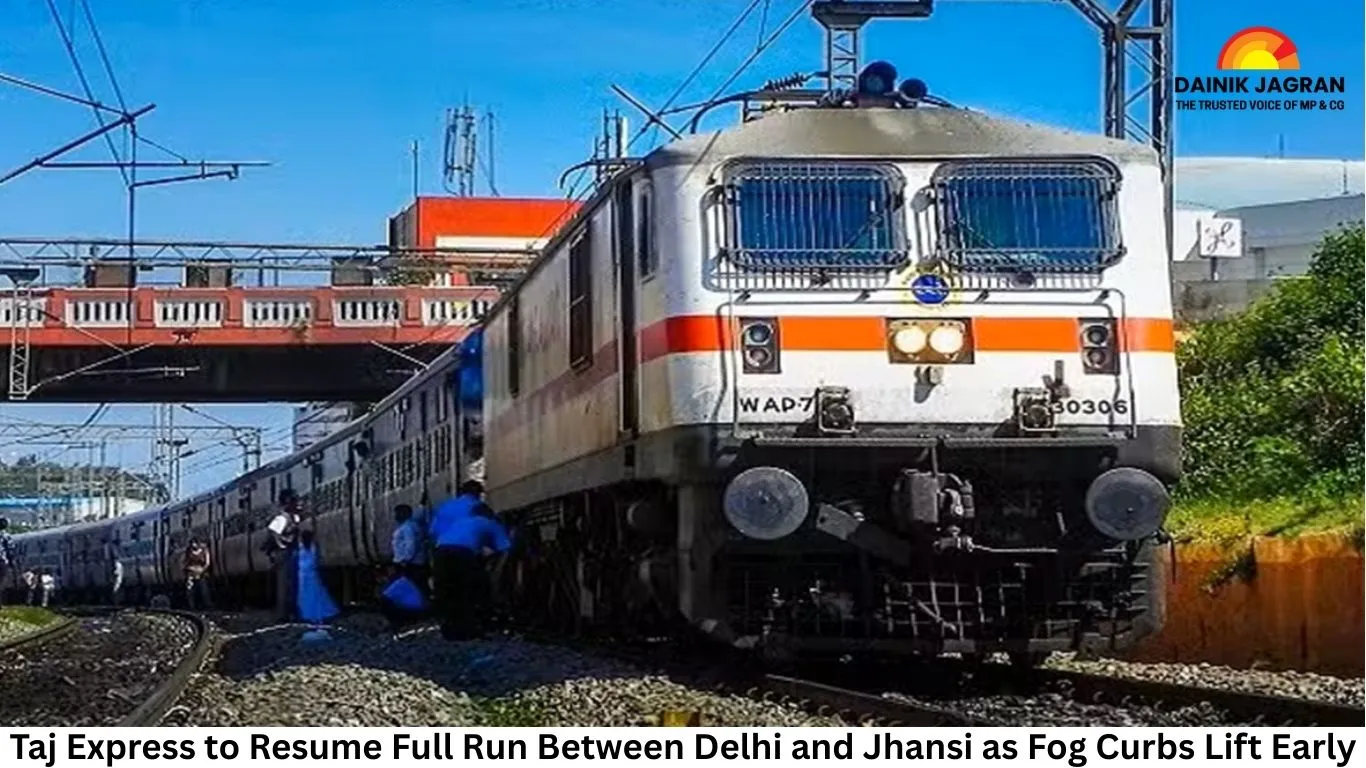
Taj Express to Resume Full Run Between Delhi and Jhansi as Fog Curbs Lift Early
Digital Desk
Railway officials said the decision was taken after weather conditions improved earlier than expected this year. Traditionally, winter fog disrupts visibility across northern India, forcing authorities to reduce speeds, cancel select trains, or shorten routes until late February. This season, however, improved atmospheric conditions allowed the railway to restore services sooner.
The early resumption is expected to benefit a large number of daily commuters, particularly passengers travelling between Gwalior and Jhansi, where the train is widely used for work and business travel. Over the past two months, the service had been terminating at Gwalior instead of continuing onward, remaining stationed for nearly four and a half hours on platform number three before returning. With the full route restored, the train will now operate according to its original timetable, easing platform congestion and improving scheduling flexibility for other services.
Railway sources said the move will also help streamline operations at Veerangana Lakshmibai Jhansi station and intermediate stations, where temporary winter adjustments had disrupted passenger flow and logistics. Officials noted that restoring normal schedules early helps avoid backlog pressure and improves punctuality across the network.
While several trains have already returned to regular service, a final decision is still pending on the resumption of operations for services linked to Barauni, including the Barauni Mail. Railway authorities indicated that operational reviews are underway and announcements will be made once feasibility assessments are completed.
Seasonal fog restrictions are imposed each winter as a safety precaution to prevent accidents caused by poor visibility. Reduced speeds and route adjustments are standard protocol, particularly on heavily trafficked northern corridors. This year’s early withdrawal signals relatively stable weather patterns and reflects the railway's effort to balance safety with passenger convenience.
Transport analysts say the restoration of full services will not only ease commuter strain but also support regional mobility and trade, especially on intercity routes that serve as daily transit lifelines. More services are expected to return to standard operations in the coming days if conditions remain favorable.




.jpg)




