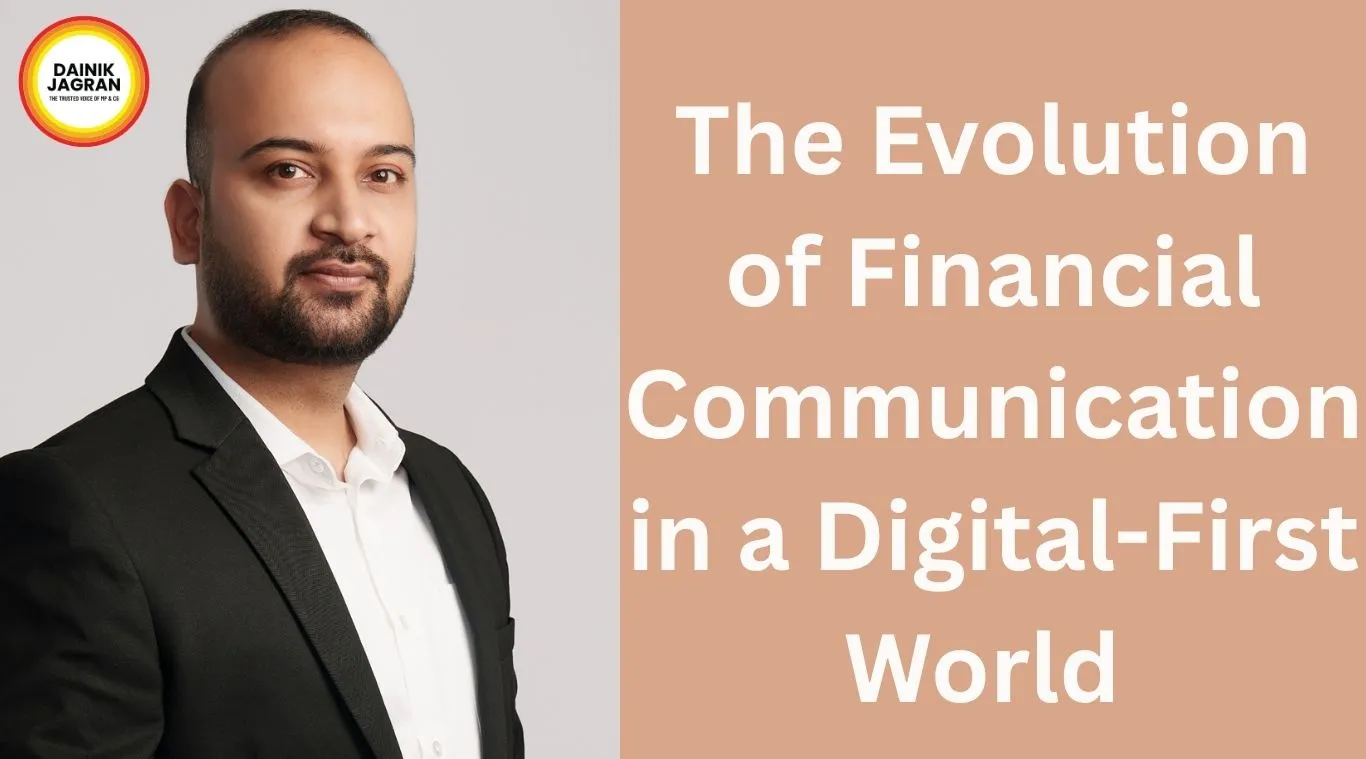
The Evolution of Financial Communication in a Digital-First World 

~ Aishwarya Gupta, Chief Marketing Officer, Jainam 

The Evolution of Financial Communication in a Digital-First World 

Financial markets have always been information intensive. The speed, scale, and accessibility of that information have changed. Today, market development can move from corporate announcement to financial media, social platforms, creator commentary and everyday conversations within minutes.  

Investors are no longer consuming financial information through a single source or on a linear journey. They are constantly navigating multiple signals, opinions, and interpretations. In this environment, the challenge is making sense of the information available. 

India’s digital ecosystem reflects the scale of this transformation. According to TRAI, the country had over 1.09 billion internet subscribers as of March 2026, with wireless connections accounting for the majority of subscriptions. The expansion of digital access has widened participation in financial conversations, bringing markets closer to audiences across geographies, demographics, and levels of financial familiarity. 

For financial services, this changes the role of communication. The opportunity is to create greater clarity, context, and understanding in a complex information environment. 

Also Read... Crude Oil Above : Why Renewed US-Iran Tensions Could Make Petrol, LPG and Flights Costlier in India

From Information Availability to Information Value 

Also Read... 8 Labourers Killed in MP Road Accident: Law on Worker Transport Explained

A single market development can generate multiple narratives, each offering a different interpretation of its meaning and possible implications. For an investor or trader, the ability to distinguish between a fact, an interpretation and an opinion becomes important. 

Also Read...  IND vs SL Galle Test: KL Rahul Hugs Devdutt Padikkal After Successful DRS

A market update can tell us what happened. Effective financial communication should go further to explain why it matters, the context surrounding it, and its potential relevance across different financial objectives. Responsible financial communication should equip individuals with the context and understanding required to make their decisions. 

Technical expertise will always remain fundamental to financial services. Its value grows when it can be translated into language, formats, and frameworks that people can understand and apply. Consumers do not need more jargon, more data, or more opinions. They need the right information, presented with the right context, at the right moment. 

The value of financial communication therefore lies in making complex information easier to understand while preserving the context and nuances of financial markets. 

The New Financial Information Journey 

The traditional financial information journey was relatively linear: a company communicated, media reported, analysts interpreted, and investors consumed. That model has changed. 

A consumer may first encounter a financial idea through a short-form video, explore it through a search engine, hear an opposing perspective from a creator, validate it through research, and then discuss it with peers before deciding whether it is relevant. 

The journey is fragmented, participative, and continuous. Brands are competing for credibility within an ecosystem where consumers can cross-check, challenge and reinterpret almost everything they see. In such environment, communication should help people navigate competing viewpoints and reduce another layer of noise. This is where enablement becomes important. 

The objective should be to strengthen investor understanding and judgement. A financial brand can create value by helping consumers ask better questions, understand the variables that matter, and recognise the difference between a market signal and a market conclusion. 

Relevance Is More Than Personalisation 

As financial participation expands beyond traditional investor segments and geographies, relevance is becoming contextual, making localisation and contextualisation important. The same financial concept can resonate with an experienced trader, a long-term investor, or someone evaluating markets for the first time. Their questions, knowledge levels, motivations, and risk considerations vary. 

Localisation should not be reduced to translating a central message into multiple languages. It requires understanding the way people naturally discuss money, markets, and financial decisions within their own cultural and social contexts. 

The thought can remain consistent while the expression evolves. The same principle applies to content formats. Short-form content can create discovery. Educational content can build understanding. Long-form analysis can support deeper evaluation. Product communication can simplify action.  

The opportunity for financial brands is to build an ecosystem where these formats work together rather than operate as disconnected pieces of content. 

The Role of Trust in an Information-Rich Market 

Consumers today have access to an unprecedented number of opinions, recommendations, and interpretations. The challenge for financial brands is to establish credibility within this conversation while remaining visible and relevant. 

That credibility comes from consistency, transparency, and intellectual honesty. 

Financial communication must acknowledge the dynamic nature of markets. Communication that presents complex market situations as certain may create short-term engagement at the expense of long-term trust. 

For financial brands, responsible communication is therefore part of brand building and can support creative communication. 

The strongest financial brands will be those that can combine the precision of financial expertise with the empathy of consumer understanding, making complex subjects more accessible while retaining the risk, volatility and individual financial circumstances involved. 

The Next Role of Financial Communication 

The next phase of financial communication will be shaped by an environment where technology continues to accelerate access, artificial intelligence expands the volume of content, and financial conversations move seamlessly across platforms, communities and formats. In this environment, communication will need to focus on usefulness, relevance, and clarity, helping people navigate information effectively. 

The opportunity for financial brands is to create communication that helps consumers distinguish information from interpretation, signal from noise, and short-term reaction from a longer-term perspective. 

This requires a fundamental shift in mindset. 

Financial communication is evolving from broadcasting information to building understanding, from capturing attention to earning trust, and from influencing decisions to enabling better judgement. 

The future of financial communication will be defined by the clarity brands can create within the market. The value will lie in the clarity brands can create as information becomes more abundant. Clarity may become one of the most valuable currencies a financial brand can offer. 

Tags:
english.dainikjagranmpcg.com
17 Aug 2026 By Danik Jagran English

The Evolution of Financial Communication in a Digital-First World 

~ Aishwarya Gupta, Chief Marketing Officer, Jainam 

Investors are no longer consuming financial information through a single source or on a linear journey. They are constantly navigating multiple signals, opinions, and interpretations. In this environment, the challenge is making sense of the information available. 

India’s digital ecosystem reflects the scale of this transformation. According to TRAI, the country had over 1.09 billion internet subscribers as of March 2026, with wireless connections accounting for the majority of subscriptions. The expansion of digital access has widened participation in financial conversations, bringing markets closer to audiences across geographies, demographics, and levels of financial familiarity. 

For financial services, this changes the role of communication. The opportunity is to create greater clarity, context, and understanding in a complex information environment. 

From Information Availability to Information Value 

A single market development can generate multiple narratives, each offering a different interpretation of its meaning and possible implications. For an investor or trader, the ability to distinguish between a fact, an interpretation and an opinion becomes important. 

A market update can tell us what happened. Effective financial communication should go further to explain why it matters, the context surrounding it, and its potential relevance across different financial objectives. Responsible financial communication should equip individuals with the context and understanding required to make their decisions. 

Technical expertise will always remain fundamental to financial services. Its value grows when it can be translated into language, formats, and frameworks that people can understand and apply. Consumers do not need more jargon, more data, or more opinions. They need the right information, presented with the right context, at the right moment. 

The value of financial communication therefore lies in making complex information easier to understand while preserving the context and nuances of financial markets. 

The New Financial Information Journey 

The traditional financial information journey was relatively linear: a company communicated, media reported, analysts interpreted, and investors consumed. That model has changed. 

A consumer may first encounter a financial idea through a short-form video, explore it through a search engine, hear an opposing perspective from a creator, validate it through research, and then discuss it with peers before deciding whether it is relevant. 

The journey is fragmented, participative, and continuous. Brands are competing for credibility within an ecosystem where consumers can cross-check, challenge and reinterpret almost everything they see. In such environment, communication should help people navigate competing viewpoints and reduce another layer of noise. This is where enablement becomes important. 

The objective should be to strengthen investor understanding and judgement. A financial brand can create value by helping consumers ask better questions, understand the variables that matter, and recognise the difference between a market signal and a market conclusion. 

Relevance Is More Than Personalisation 

As financial participation expands beyond traditional investor segments and geographies, relevance is becoming contextual, making localisation and contextualisation important. The same financial concept can resonate with an experienced trader, a long-term investor, or someone evaluating markets for the first time. Their questions, knowledge levels, motivations, and risk considerations vary. 

Localisation should not be reduced to translating a central message into multiple languages. It requires understanding the way people naturally discuss money, markets, and financial decisions within their own cultural and social contexts. 

The thought can remain consistent while the expression evolves. The same principle applies to content formats. Short-form content can create discovery. Educational content can build understanding. Long-form analysis can support deeper evaluation. Product communication can simplify action.  

The opportunity for financial brands is to build an ecosystem where these formats work together rather than operate as disconnected pieces of content. 

The Role of Trust in an Information-Rich Market 

Consumers today have access to an unprecedented number of opinions, recommendations, and interpretations. The challenge for financial brands is to establish credibility within this conversation while remaining visible and relevant. 

That credibility comes from consistency, transparency, and intellectual honesty. 

Financial communication must acknowledge the dynamic nature of markets. Communication that presents complex market situations as certain may create short-term engagement at the expense of long-term trust. 

For financial brands, responsible communication is therefore part of brand building and can support creative communication. 

The strongest financial brands will be those that can combine the precision of financial expertise with the empathy of consumer understanding, making complex subjects more accessible while retaining the risk, volatility and individual financial circumstances involved. 

The Next Role of Financial Communication 

The next phase of financial communication will be shaped by an environment where technology continues to accelerate access, artificial intelligence expands the volume of content, and financial conversations move seamlessly across platforms, communities and formats. In this environment, communication will need to focus on usefulness, relevance, and clarity, helping people navigate information effectively. 

The opportunity for financial brands is to create communication that helps consumers distinguish information from interpretation, signal from noise, and short-term reaction from a longer-term perspective. 

This requires a fundamental shift in mindset. 

Financial communication is evolving from broadcasting information to building understanding, from capturing attention to earning trust, and from influencing decisions to enabling better judgement. 

The future of financial communication will be defined by the clarity brands can create within the market. The value will lie in the clarity brands can create as information becomes more abundant. Clarity may become one of the most valuable currencies a financial brand can offer. 

https://english.dainikjagranmpcg.com/business/the-evolution-of-financial-communication-in-a-digital-first-world/article-26487

--------

🚨 Beat the News Rush – Join Now!

Get breaking alerts, hot exclusives, and game-changing stories instantly on your phone. No delays, no fluff – just the edge you need. ⚡

Tap to join: 

🟢 WhatsApp Channel: Dainik Jagran MP CG

Crave more?

🅕 Facebook: Dainik Jagran MP CG English

🅧 Twitter (X): Dainik Jagran MP CG

🅘 Instagram: Dainik Jagran MP CG

Share the fire – keep your crew ahead! 🗞️🔥

Trending News