Hormuz Traffic Falls to Six Ships as US–Iran Talks Stall

Digital desk

Hormuz Traffic Falls to Six Ships as US–Iran Talks Stall

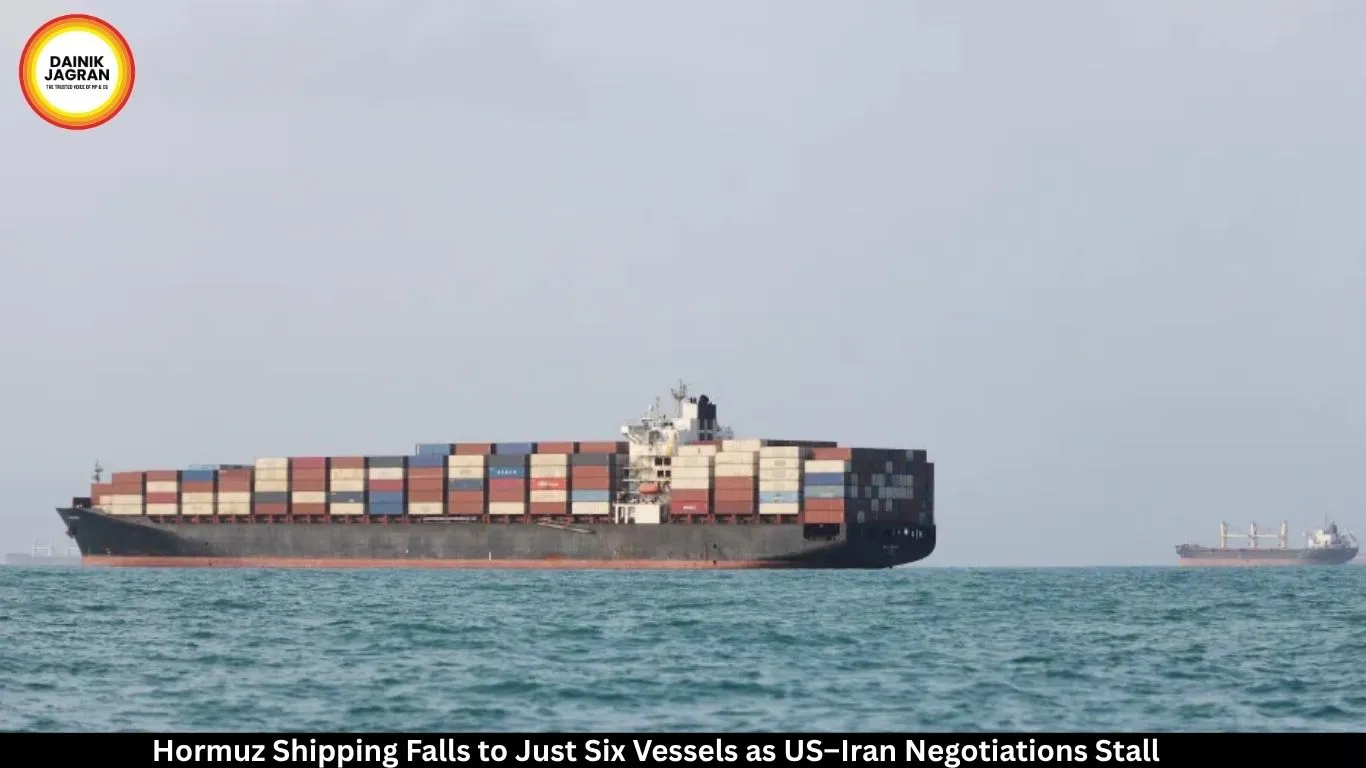
Shipping through the Strait of Hormuz fell to six vessels as US–Iran negotiations stalled and crude prices moved higher.

 Only six commercial vessels reportedly passed through the Strait of Hormuz on Monday as hopes of an early agreement between the United States and Iran weakened.

The figure was below the recent 10-day average of approximately 11 vessels and dramatically lower than the pre-war movement of around 130 to 140 ships a day.

Four commodity vessels entered the waterway while two departed. Two of the inbound vessels were reportedly empty oil-product tankers, while the outgoing ships carried liquefied petroleum gas and residual fuels.

Also Read... Iran Warns Gulf Nations Over Possible US Military Action

Negotiations Caught in New Dispute

Also Read... Iran Rules Out Direct US Talks, Says Hormuz Agreement With Oman Near

The decline in shipping came as Washington and Tehran exchanged competing demands concerning sanctions, compensation and conditions for reopening the strategic waterway.

Also Read... Iran Rejects Trump’s ‘Total Control’ Claim, Says Strait of Hormuz Remains Blocked

US President Donald Trump has demanded compensation from Iran for deaths and damage attributed to Tehran and groups associated with it. Iran has separately sought sanctions relief, compensation for wartime damage and other security guarantees.

No final agreement has been signed.

The Strait of Hormuz is one of the world’s most important energy corridors. Prolonged disruption can affect shipments from major Gulf oil and gas producers.

Oil and Rupee Under Pressure

Brent crude rose to around $88 a barrel during Tuesday’s Asian trading, while US crude crossed $82. The Indian rupee weakened to approximately ₹95.40 against the dollar during early trade, with traders reporting possible intervention by state-run banks on behalf of the Reserve Bank of India.

India imports most of its crude-oil requirements. Sustained higher prices could increase the country’s import bill, pressure the rupee and add to inflation through transportation, manufacturing and aviation costs.

This does not automatically mean an immediate increase in retail petrol, diesel or LPG prices. Domestic prices will depend on government policy, taxes, oil-company margins and the duration of the international disruption.
 

english.dainikjagranmpcg.com
11 Aug 2026 By Abhishek Joshi

Hormuz Traffic Falls to Six Ships as US–Iran Talks Stall

Digital desk

 Only six commercial vessels reportedly passed through the Strait of Hormuz on Monday as hopes of an early agreement between the United States and Iran weakened.

The figure was below the recent 10-day average of approximately 11 vessels and dramatically lower than the pre-war movement of around 130 to 140 ships a day.

Four commodity vessels entered the waterway while two departed. Two of the inbound vessels were reportedly empty oil-product tankers, while the outgoing ships carried liquefied petroleum gas and residual fuels.

Negotiations Caught in New Dispute

The decline in shipping came as Washington and Tehran exchanged competing demands concerning sanctions, compensation and conditions for reopening the strategic waterway.

US President Donald Trump has demanded compensation from Iran for deaths and damage attributed to Tehran and groups associated with it. Iran has separately sought sanctions relief, compensation for wartime damage and other security guarantees.

No final agreement has been signed.

The Strait of Hormuz is one of the world’s most important energy corridors. Prolonged disruption can affect shipments from major Gulf oil and gas producers.

Oil and Rupee Under Pressure

Brent crude rose to around $88 a barrel during Tuesday’s Asian trading, while US crude crossed $82. The Indian rupee weakened to approximately ₹95.40 against the dollar during early trade, with traders reporting possible intervention by state-run banks on behalf of the Reserve Bank of India.

India imports most of its crude-oil requirements. Sustained higher prices could increase the country’s import bill, pressure the rupee and add to inflation through transportation, manufacturing and aviation costs.

This does not automatically mean an immediate increase in retail petrol, diesel or LPG prices. Domestic prices will depend on government policy, taxes, oil-company margins and the duration of the international disruption.
 

https://english.dainikjagranmpcg.com/international/hormuz-shipping-six-vessels-us-iran-talks-oil-prices/article-25657

--------

🚨 Beat the News Rush – Join Now!

Get breaking alerts, hot exclusives, and game-changing stories instantly on your phone. No delays, no fluff – just the edge you need. ⚡

Tap to join: 

🟢 WhatsApp Channel: Dainik Jagran MP CG

Crave more?

🅕 Facebook: Dainik Jagran MP CG English

🅧 Twitter (X): Dainik Jagran MP CG

🅘 Instagram: Dainik Jagran MP CG

Share the fire – keep your crew ahead! 🗞️🔥

Trending News