Netanyahu Rejects US-Backed 15-Point Gaza Roadmap as Disarmament Dispute Deepens
Digital desk
- The plan links an Israeli withdrawal to verified weapons decommissioning, Palestinian technocratic administration and deployment of an international stabilisation force.
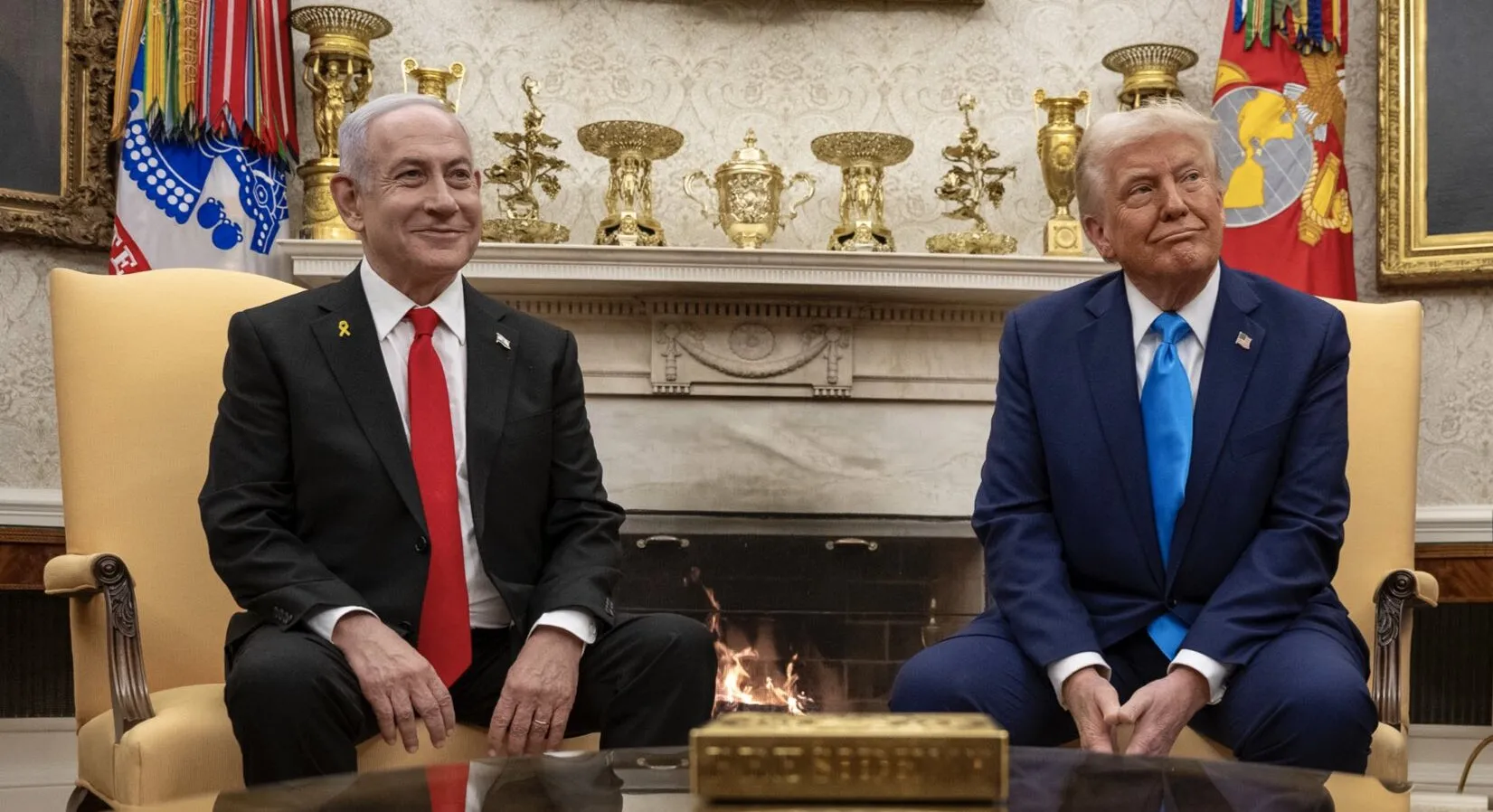
Israeli Prime Minister Benjamin Netanyahu has rejected the latest 15-point roadmap for implementing the next phase of the Gaza peace process, arguing that it does not provide the complete disarmament demanded by Israel.
The roadmap was issued through US President Donald Trump’s US-led Board of Peace. It is not a separate peace treaty: it is an implementation framework for Phase Two of the administration’s earlier 20-point Gaza plan.
Reuters reported that Israel had reduced military attacks under American pressure but that Netanyahu rejected the current roadmap during a cabinet meeting. The disagreement centres on the order in which disarmament, the cessation of Israeli operations and Israel’s withdrawal would occur. Reuters
What Exactly Is the US Proposal?
The proposal calls for Israeli forces to withdraw in phases while Hamas and other armed groups place their weapons under a Palestinian-led authority. A temporary international force would monitor the ceasefire and help train Palestinian police.
Its 15 provisions can be summarised as follows:
| Point | Provision |
|---|---|
| 1 | Reaffirms the earlier Trump plan and UN Security Council Resolution 2803, including Israeli withdrawal, Palestinian governance, reconstruction and a political path towards Palestinian self-determination and statehood. |
| 2 | Israel and Hamas must complete their ceasefire commitments. Implementation mechanisms and a timetable would be prepared within 14 days and verified by an International Verification Committee. |
| 3 | Movement from one phase to the next would depend on verified completion of the preceding obligations. |
| 4 | Hamas and other factions would transfer civilian government and security functions to the National Committee for the Administration of Gaza, or NCAG. |
| 5 | The NCAG would maintain public services, audit Gaza’s finances and assets and address legitimate liabilities. |
| 6 | Gaza would operate under the principle of “one authority, one law, one weapon.” |
| 7 | Palestinian police would be vetted and trained, with authorised weapons controlled by the NCAG. |
| 8 | Heavy weapons, weapons-production facilities, depots and tunnels would be decommissioned or placed in monitored storage. The process would be linked to Israel’s phased withdrawal. |
| 9 | Personal weapons would be regulated and licensed by the Palestinian administration. |
| 10 | Weapons held by militias would be placed under NCAG control. Militia members would not automatically join the police or security forces. |
| 11 | Palestinian groups would sign a social-peace agreement prohibiting internal violence, reprisals and unauthorised armed displays. |
| 12 | A temporary International Stabilization Force would monitor the ceasefire, separate Israeli and Palestinian-controlled areas, protect aid deliveries and train police. It would not police Palestinian society. |
| 13 | Israeli forces would withdraw in stages, while forced displacement of Palestinians would be prohibited. |
| 14 | The NCAG would assume responsibility for Gaza’s internal security. |
| 15 | Reconstruction would proceed under a timetable supervised by the Board of Peace and the Palestinian administration. |
The complete roadmap was published by the Board of Peace and reproduced by the Jewish News Syndicate. The White House’s official statement confirms that Phase Two envisages a Palestinian technocratic administration, Board of Peace oversight and an International Stabilization Force.
Why Has Israel Rejected It?
Israel maintains that Hamas must surrender all weapons and lose its military capabilities before further withdrawal takes place.
Hamas, by contrast, says Israel must first stop attacks and honour its withdrawal commitments. It has reportedly agreed to place weapons in storage under the US-backed Palestinian technocratic administration but has avoided accepting Israel’s definition of complete “disarmament.”
The roadmap itself generally uses the language of decommissioning and monitored storage, meaning the parties have yet to agree on whether weapons would be destroyed, surrendered permanently or temporarily secured under Palestinian supervision.
What Happens Next?
The roadmap cannot advance unless the parties agree on verification and sequencing. Negotiators will have to resolve three central questions:
- What qualifies as verified disarmament or decommissioning?
- Which Israeli withdrawal must occur before each weapons-related step?
- Who will control stored weapons and enforce compliance?
Until those issues are settled, the document remains a diplomatic proposal rather than an implemented agreement.
Netanyahu Rejects US-Backed 15-Point Gaza Roadmap as Disarmament Dispute Deepens
Digital desk
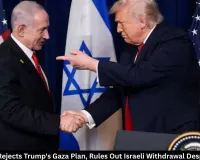
Israeli Prime Minister Benjamin Netanyahu has rejected the latest 15-point roadmap for implementing the next phase of the Gaza peace process, arguing that it does not provide the complete disarmament demanded by Israel.
The roadmap was issued through US President Donald Trump’s US-led Board of Peace. It is not a separate peace treaty: it is an implementation framework for Phase Two of the administration’s earlier 20-point Gaza plan.
Reuters reported that Israel had reduced military attacks under American pressure but that Netanyahu rejected the current roadmap during a cabinet meeting. The disagreement centres on the order in which disarmament, the cessation of Israeli operations and Israel’s withdrawal would occur. Reuters
What Exactly Is the US Proposal?
The proposal calls for Israeli forces to withdraw in phases while Hamas and other armed groups place their weapons under a Palestinian-led authority. A temporary international force would monitor the ceasefire and help train Palestinian police.
Its 15 provisions can be summarised as follows:
| Point | Provision |
|---|---|
| 1 | Reaffirms the earlier Trump plan and UN Security Council Resolution 2803, including Israeli withdrawal, Palestinian governance, reconstruction and a political path towards Palestinian self-determination and statehood. |
| 2 | Israel and Hamas must complete their ceasefire commitments. Implementation mechanisms and a timetable would be prepared within 14 days and verified by an International Verification Committee. |
| 3 | Movement from one phase to the next would depend on verified completion of the preceding obligations. |
| 4 | Hamas and other factions would transfer civilian government and security functions to the National Committee for the Administration of Gaza, or NCAG. |
| 5 | The NCAG would maintain public services, audit Gaza’s finances and assets and address legitimate liabilities. |
| 6 | Gaza would operate under the principle of “one authority, one law, one weapon.” |
| 7 | Palestinian police would be vetted and trained, with authorised weapons controlled by the NCAG. |
| 8 | Heavy weapons, weapons-production facilities, depots and tunnels would be decommissioned or placed in monitored storage. The process would be linked to Israel’s phased withdrawal. |
| 9 | Personal weapons would be regulated and licensed by the Palestinian administration. |
| 10 | Weapons held by militias would be placed under NCAG control. Militia members would not automatically join the police or security forces. |
| 11 | Palestinian groups would sign a social-peace agreement prohibiting internal violence, reprisals and unauthorised armed displays. |
| 12 | A temporary International Stabilization Force would monitor the ceasefire, separate Israeli and Palestinian-controlled areas, protect aid deliveries and train police. It would not police Palestinian society. |
| 13 | Israeli forces would withdraw in stages, while forced displacement of Palestinians would be prohibited. |
| 14 | The NCAG would assume responsibility for Gaza’s internal security. |
| 15 | Reconstruction would proceed under a timetable supervised by the Board of Peace and the Palestinian administration. |
The complete roadmap was published by the Board of Peace and reproduced by the Jewish News Syndicate. The White House’s official statement confirms that Phase Two envisages a Palestinian technocratic administration, Board of Peace oversight and an International Stabilization Force.
Why Has Israel Rejected It?
Israel maintains that Hamas must surrender all weapons and lose its military capabilities before further withdrawal takes place.
Hamas, by contrast, says Israel must first stop attacks and honour its withdrawal commitments. It has reportedly agreed to place weapons in storage under the US-backed Palestinian technocratic administration but has avoided accepting Israel’s definition of complete “disarmament.”
The roadmap itself generally uses the language of decommissioning and monitored storage, meaning the parties have yet to agree on whether weapons would be destroyed, surrendered permanently or temporarily secured under Palestinian supervision.
What Happens Next?
The roadmap cannot advance unless the parties agree on verification and sequencing. Negotiators will have to resolve three central questions:
- What qualifies as verified disarmament or decommissioning?
- Which Israeli withdrawal must occur before each weapons-related step?
- Who will control stored weapons and enforce compliance?
Until those issues are settled, the document remains a diplomatic proposal rather than an implemented agreement.

Recommended For You
--------
🚨 Beat the News Rush – Join Now!
Get breaking alerts, hot exclusives, and game-changing stories instantly on your phone. No delays, no fluff – just the edge you need. ⚡
Tap to join:
🟢 WhatsApp Channel: Dainik Jagran MP CG
Crave more?
🅕 Facebook: Dainik Jagran MP CG English
🅧 Twitter (X): Dainik Jagran MP CG
🅘 Instagram: Dainik Jagran MP CG
Share the fire – keep your crew ahead! 🗞️🔥