The Everyday Commute Shouldn't Be a Test of Survival
Digital Desk
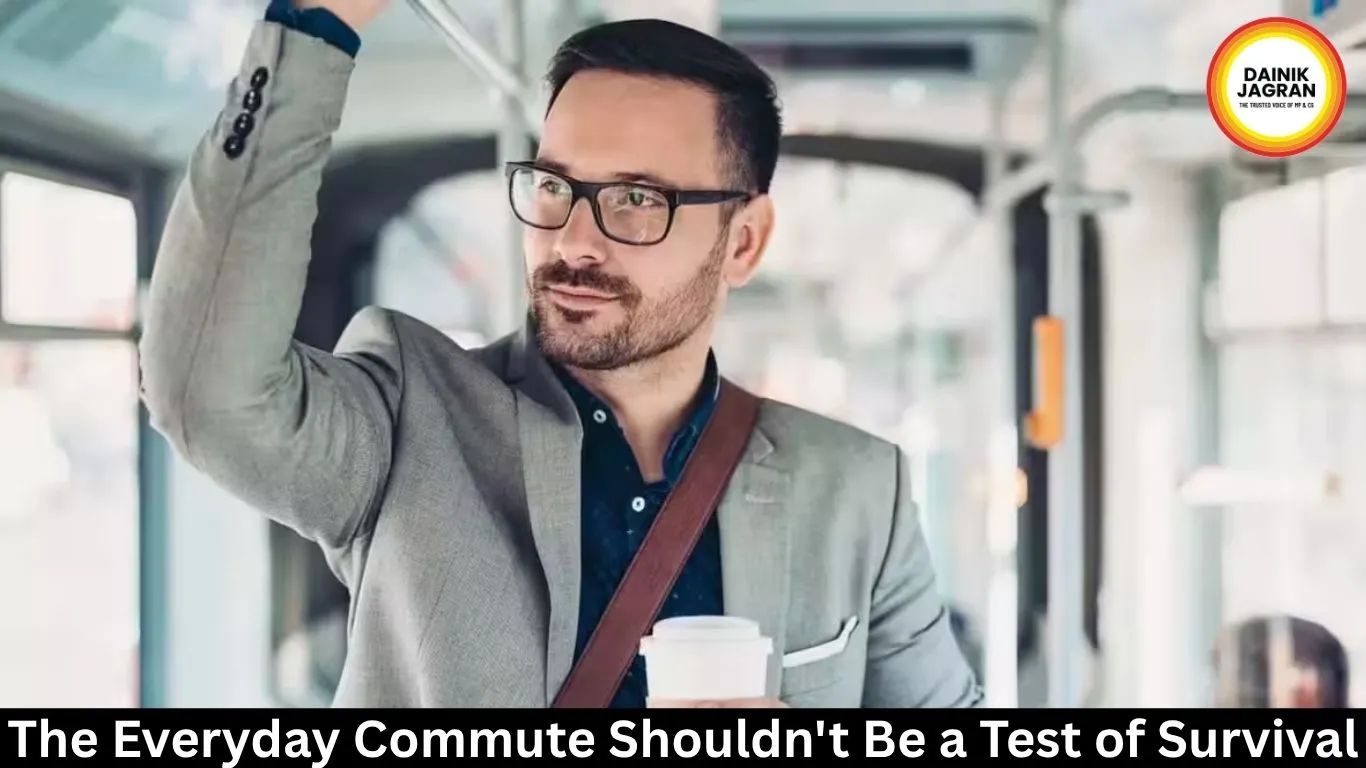
For millions of Indians, stepping out of the house each morning is not just the beginning of another workday—it is the beginning of a daily struggle to reach home safely. The journey to work, school or college has become so unpredictable that many people now consider reaching their destination without an accident or confrontation a matter of good fortune rather than a basic expectation.
Roads are meant to connect people, not expose them to constant danger. Yet, everyday commuters are forced to navigate broken roads, reckless driving, overcrowded public transport, poor traffic management and inadequate pedestrian infrastructure. The daily commute, instead of being a routine part of life, often feels like a test of patience, endurance and survival.
India records one of the highest numbers of road accident fatalities in the world. Behind every statistic is a family that has lost a loved one, a child who lost a parent, or a worker whose life changed in a matter of seconds. Many of these tragedies are preventable. Speeding, drunk driving, distracted driving, lack of helmet and seatbelt use, poor road engineering and weak enforcement continue to claim thousands of lives every year.
But commuting challenges extend beyond road accidents. In many cities, public transport remains overcrowded during peak hours. Passengers travel in packed buses and trains where comfort and safety often take a back seat. Women frequently raise concerns about harassment during daily travel, while elderly citizens and people with disabilities struggle with inaccessible stations, uneven footpaths and the absence of basic facilities.
Pedestrians remain among the most neglected road users. Crossing a busy intersection without a proper zebra crossing or functional traffic signal can become a risky exercise. Footpaths, where they exist, are often occupied by parked vehicles, vendors or construction material, forcing people to walk on busy roads alongside fast-moving traffic.
Cyclists face similar challenges. Despite growing awareness about sustainable mobility, dedicated cycling infrastructure remains limited in most Indian cities. As a result, those choosing bicycles for health, affordability or environmental reasons often find themselves sharing narrow roads with heavy vehicles.
Urban congestion further compounds the problem. Hours lost in traffic reduce productivity, increase stress and contribute to rising air pollution. Long commutes also affect physical and mental health, leaving people exhausted before the workday even begins. The economic cost of congestion, fuel wastage and delayed movement runs into billions every year.
Improving commuter safety requires more than occasional enforcement drives. It demands long-term investment in road engineering, efficient public transport, pedestrian-friendly infrastructure and technology-driven traffic management. Better road design, stricter enforcement of traffic laws, regular vehicle inspections and continuous public awareness campaigns can significantly reduce risks.
Equally important is civic responsibility. Drivers must respect speed limits, pedestrians should follow road safety norms, and commuters should avoid distractions such as mobile phone use while driving or crossing roads. Safety is a shared responsibility between authorities and citizens.
Several Indian cities have shown that change is possible through integrated mobility planning, improved metro networks, dedicated bus corridors and smarter traffic systems. These examples demonstrate that safer commuting is not an unrealistic goal but a matter of sustained political will, better planning and consistent implementation.
Every citizen deserves to begin and end the day without fearing the journey in between. A commute should be an ordinary part of life—not an ordeal that demands luck, courage or survival instincts.
Creating safer roads is not merely about reducing accident numbers; it is about protecting human dignity, improving quality of life and ensuring that every journey ends safely. That should be the minimum expectation in any modern society.
The Everyday Commute Shouldn't Be a Test of Survival
Digital Desk
Roads are meant to connect people, not expose them to constant danger. Yet, everyday commuters are forced to navigate broken roads, reckless driving, overcrowded public transport, poor traffic management and inadequate pedestrian infrastructure. The daily commute, instead of being a routine part of life, often feels like a test of patience, endurance and survival.
India records one of the highest numbers of road accident fatalities in the world. Behind every statistic is a family that has lost a loved one, a child who lost a parent, or a worker whose life changed in a matter of seconds. Many of these tragedies are preventable. Speeding, drunk driving, distracted driving, lack of helmet and seatbelt use, poor road engineering and weak enforcement continue to claim thousands of lives every year.
But commuting challenges extend beyond road accidents. In many cities, public transport remains overcrowded during peak hours. Passengers travel in packed buses and trains where comfort and safety often take a back seat. Women frequently raise concerns about harassment during daily travel, while elderly citizens and people with disabilities struggle with inaccessible stations, uneven footpaths and the absence of basic facilities.
Pedestrians remain among the most neglected road users. Crossing a busy intersection without a proper zebra crossing or functional traffic signal can become a risky exercise. Footpaths, where they exist, are often occupied by parked vehicles, vendors or construction material, forcing people to walk on busy roads alongside fast-moving traffic.
Cyclists face similar challenges. Despite growing awareness about sustainable mobility, dedicated cycling infrastructure remains limited in most Indian cities. As a result, those choosing bicycles for health, affordability or environmental reasons often find themselves sharing narrow roads with heavy vehicles.
Urban congestion further compounds the problem. Hours lost in traffic reduce productivity, increase stress and contribute to rising air pollution. Long commutes also affect physical and mental health, leaving people exhausted before the workday even begins. The economic cost of congestion, fuel wastage and delayed movement runs into billions every year.
Improving commuter safety requires more than occasional enforcement drives. It demands long-term investment in road engineering, efficient public transport, pedestrian-friendly infrastructure and technology-driven traffic management. Better road design, stricter enforcement of traffic laws, regular vehicle inspections and continuous public awareness campaigns can significantly reduce risks.
Equally important is civic responsibility. Drivers must respect speed limits, pedestrians should follow road safety norms, and commuters should avoid distractions such as mobile phone use while driving or crossing roads. Safety is a shared responsibility between authorities and citizens.
Several Indian cities have shown that change is possible through integrated mobility planning, improved metro networks, dedicated bus corridors and smarter traffic systems. These examples demonstrate that safer commuting is not an unrealistic goal but a matter of sustained political will, better planning and consistent implementation.
Every citizen deserves to begin and end the day without fearing the journey in between. A commute should be an ordinary part of life—not an ordeal that demands luck, courage or survival instincts.
Creating safer roads is not merely about reducing accident numbers; it is about protecting human dignity, improving quality of life and ensuring that every journey ends safely. That should be the minimum expectation in any modern society.

Recommended For You
--------
🚨 Beat the News Rush – Join Now!
Get breaking alerts, hot exclusives, and game-changing stories instantly on your phone. No delays, no fluff – just the edge you need. ⚡
Tap to join:
🟢 WhatsApp Channel: Dainik Jagran MP CG
Crave more?
🅕 Facebook: Dainik Jagran MP CG English
🅧 Twitter (X): Dainik Jagran MP CG
🅘 Instagram: Dainik Jagran MP CG
Share the fire – keep your crew ahead! 🗞️🔥