


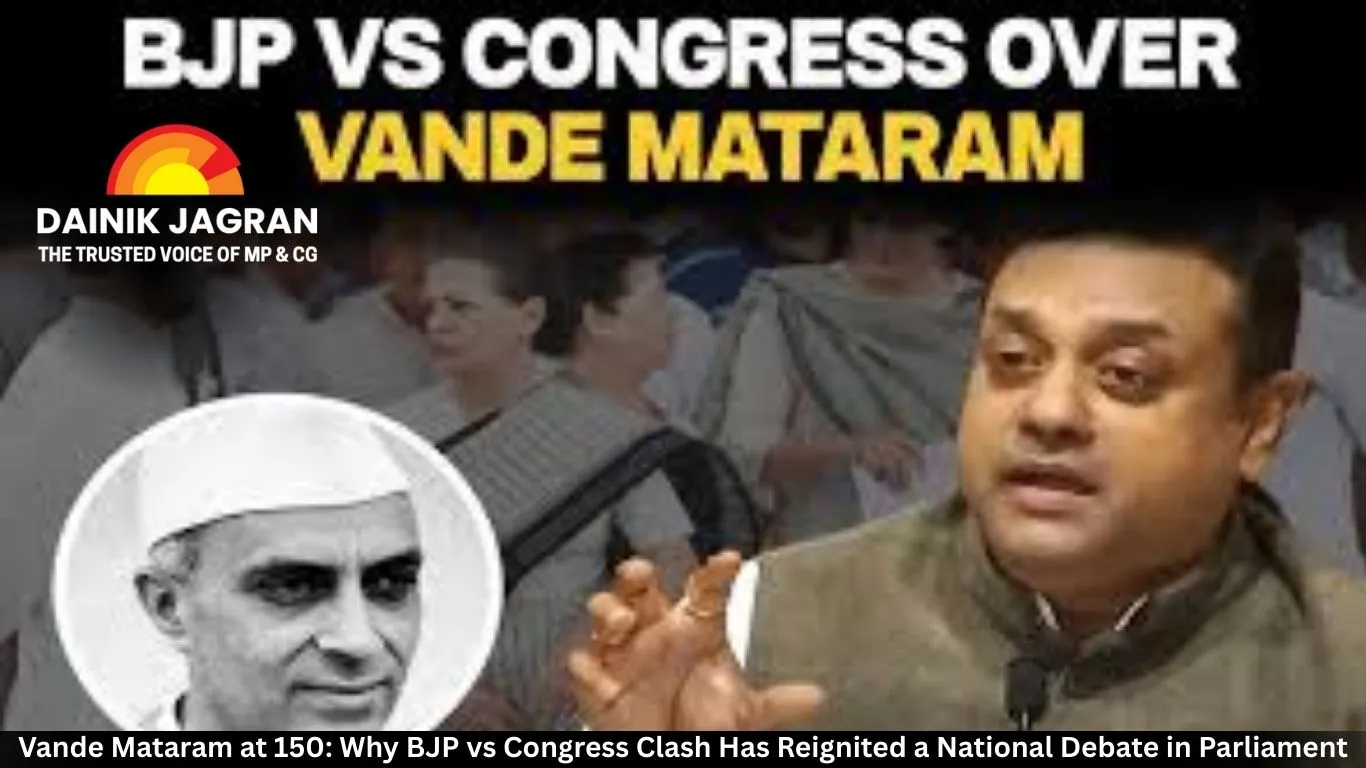
Vande Mataram at 150: Why BJP vs Congress Clash Has Reignited a National Debate in Parliament
Digital Desk
Vande Mataram at 150: Politics, Identity and a Debate Rekindled in Parliament
India’s national song, Vande Mataram, has completed 150 years since it was written by Bankim Chandra Chattopadhyay in 1875. What should have been a moment of cultural pride has once again turned into a major political flashpoint between the BJP and the Congress. As Prime Minister Narendra Modi initiated a special debate on the song in the Lok Sabha, the old questions around nationalism, secularism, and historical choices resurfaced with full force.
The government is marking the 150-year milestone through cultural events, public recitations, and special discussions in Parliament. The Lok Sabha began a 10-hour debate led by PM Modi, while Home Minister Amit Shah will open the conversation in the Rajya Sabha. Several BJP-ruled states have also encouraged—sometimes mandated—the singing of Vande Mataram in schools and offices, intensifying political reactions.
Why BJP Wants Vande Mataram at the Center of National Identity
For the Bharatiya Janata Party, Vande Mataram is a non-negotiable symbol of Indian nationalism.
According to BJP leaders, the song represents:
India’s cultural civilizational ethos
The emotional backbone of the freedom struggle
A unifying patriotic symbol
A tribute to freedom fighters who used it as a war cry
The BJP accuses Congress of “disrespecting freedom fighters” by avoiding mandatory recitations and allegedly diluting national identity for vote-bank politics. The party argues that if the song played such a powerful role during the independence movement, it deserves universal respect today.
Why Congress Opposes Making It Mandatory
The Congress takes a sharply different stance.
The party maintains that:
The song is being used as a political weapon
Compulsion violates freedom of conscience and religion
True nationalism thrives on plural beliefs, not enforced symbols
Historical decisions were made to maintain religious harmony
Congress leaders argue that only the first two stanzas of Vande Mataram are neutral and devotional. The remaining stanzas, which reference Hindu goddesses such as Durga, Lakshmi, and Saraswati, have historically made some communities uncomfortable. In 1937, the Congress officially restricted public recitation to the first two stanzas for this reason.
PM Modi Revisits History
PM Modi used historical letters between Mohammad Ali Jinnah and Jawaharlal Nehru to argue that Congress “bowed down” to the Muslim League by accepting objections to the song. He also questioned why, despite Mahatma Gandhi once calling it a “national anthem,” Vande Mataram was never given that status.
The Constituent Assembly eventually chose Jana Gana Mana as the national anthem and accepted only the first two stanzas of Vande Mataram as the national song.
The Legal Position
In 1986, the Supreme Court held that no citizen can be compelled to sing even the national anthem. By that logic, Vande Mataram cannot be made mandatory either.
The government may promote it—but not punish anyone for not singing it.
The Vande Mataram debate is not just about a song. It reflects deeper ideological differences—ownership of national memory, cultural identity, and interpretations of secularism. As Parliament reopens this historical debate, the question remains: Can a national symbol unite, if its meaning itself is contested?




.jpg)




