


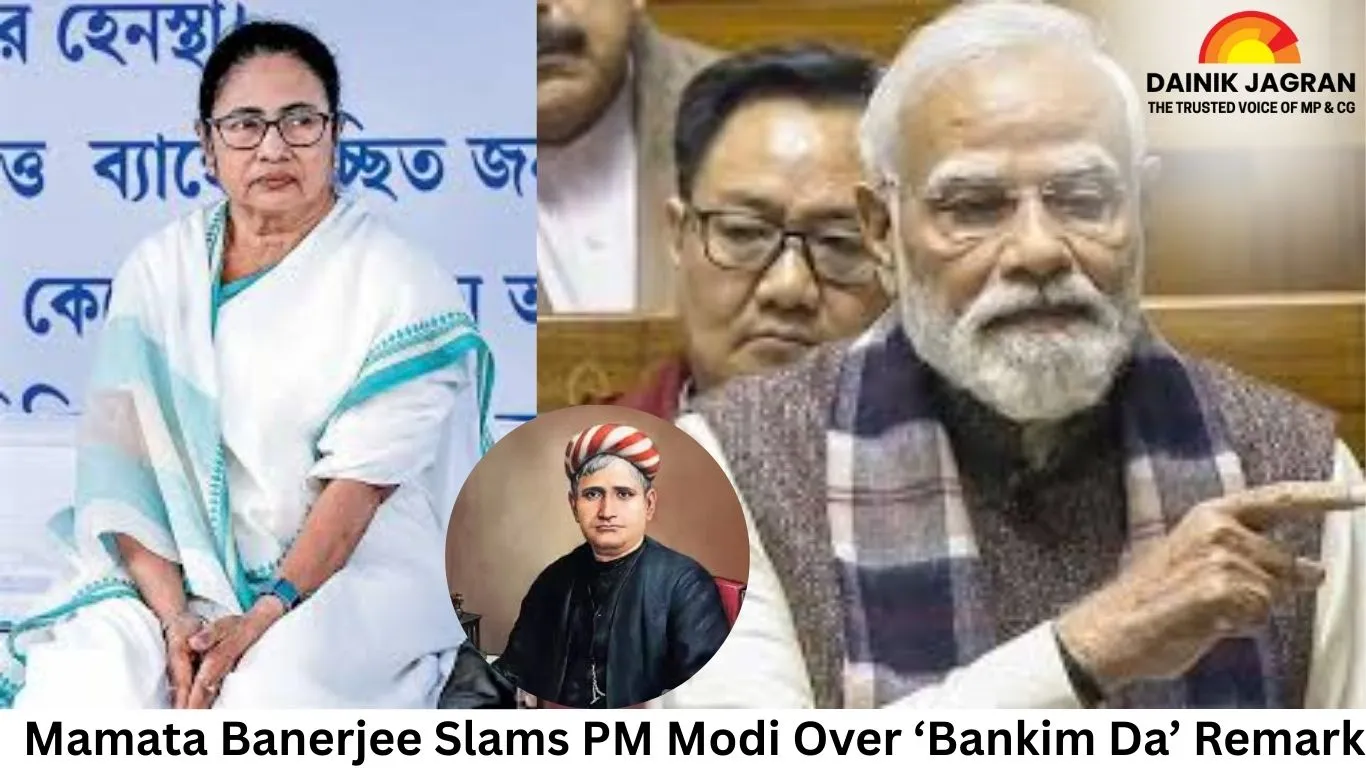
Mamata Banerjee Slams PM Modi Over ‘Bankim Da’ Remark, Demands Apology for ‘Insulting’ Bankim Chandra Chattopadhyay
Digital Desk
Addressing a public event in Cooch Behar, Banerjee said the Prime Minister had failed to accord the dignity due to one of Bengal’s greatest literary figures. Without naming him directly, she said the remark reduced Bankim Chandra to a colloquial address used for acquaintances.
“You called Bankim Chandra Chattopadhyay ‘Bankim da’, as if he were someone like Shyam-da or Hari-da,” Banerjee said. “He is the man who wrote our national song. You could not even show him that minimum respect. You should bow your head in shame and seek forgiveness from the people.”
Her comments come amid continuing protests by the Trinamool Congress, which has staged demonstrations both inside and outside Parliament over the past few days. Party leaders say the Prime Minister’s phrasing trivialised a towering cultural and nationalist icon at a moment meant to honour his contribution.
TMC MPs have demanded a formal apology, arguing that the remark has hurt Bengali sentiments and disrespected the legacy of the author whose work inspired generations of freedom fighters. Senior leaders claim the controversy reflects what they describe as the Centre’s lack of sensitivity toward regional culture and history.
The BJP has dismissed the charges as politically motivated, maintaining that the Prime Minister intended no disrespect and had expressed admiration for Bankim Chandra during his speech. The row, however, shows no sign of abating as both parties prepare for upcoming electoral battles in Bengal, where cultural identity remains a powerful political tool.



.jpg)




