Pakistan-Somalia Defence Pact: Islamabad’s New Strategic Push in Horn of Africa
Digital desk
Pakistan’s defence cooperation agreement with Somalia could expand Islamabad’s strategic role in the Horn of Africa, Red Sea and western Indian Ocean amid growing Saudi and Turkish engagement.
Pakistan’s decision to deepen defence cooperation with Somalia could mark a new phase in Islamabad’s efforts to expand its strategic role beyond South Asia and into the wider security architecture of the Red Sea, Gulf of Aden and western Indian Ocean.
The defence cooperation agreement, signed in Islamabad on August 4, covers counter-terrorism, military training, exchanges and capability building. The agreement came days before Pakistan, Saudi Arabia and Turkey signed the Mecca Joint Defence Agreement, creating a broader framework for security cooperation.
The timing has drawn attention because Somalia sits at the intersection of several competing strategic interests involving Saudi Arabia, Turkey, the UAE and other regional and global powers.
Somalia Gains Defence Partner
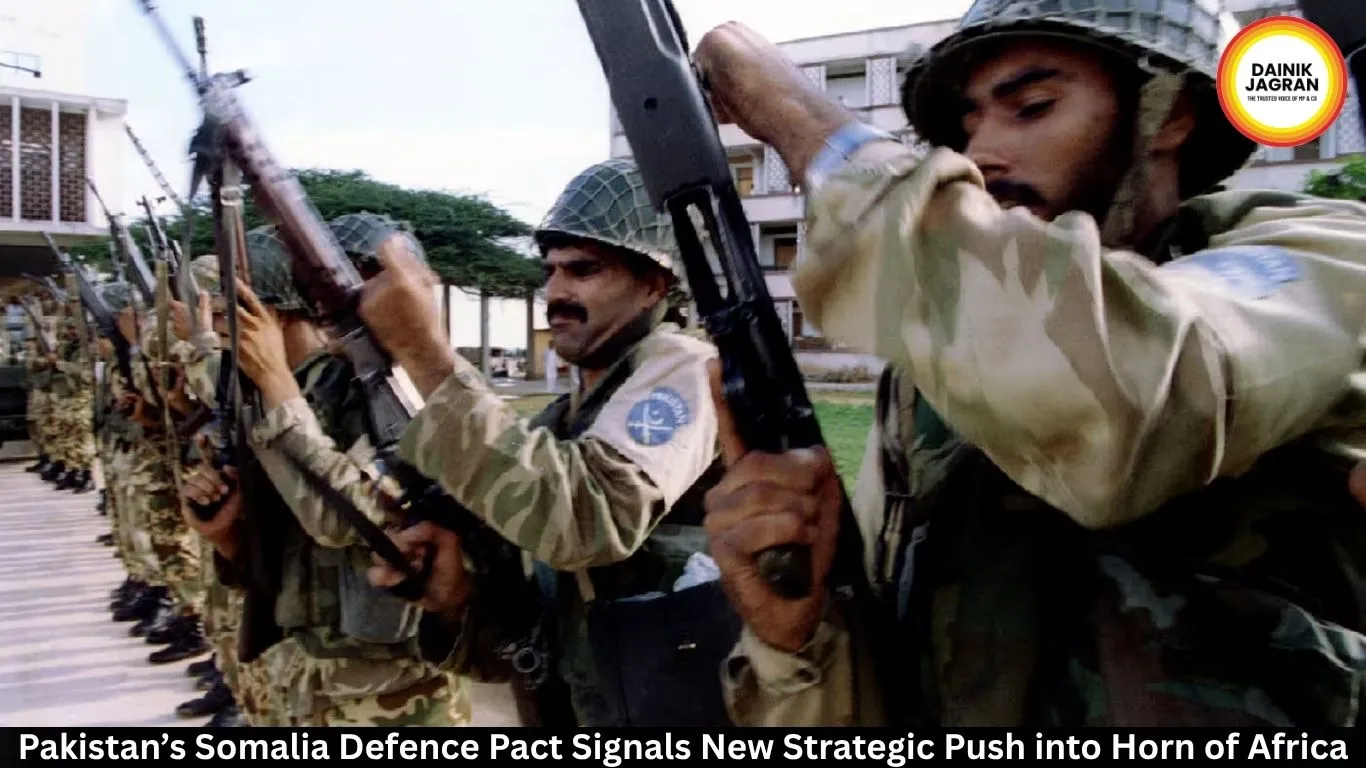
Pakistan has historical links with Somalia through its participation in United Nations operations in the country during the early 1990s. Pakistani troops were among the international forces involved in the UN mission in Mogadishu before leaving the country in 1995.
The latest agreement, however, represents a different form of engagement. Rather than committing large numbers of combat troops, Pakistan is expected to focus on training, counter-terrorism expertise, military exchanges and capability development.
Somalia has been rebuilding its security forces while continuing its fight against Al-Shabaab, the Al-Qaeda-linked militant organisation that remains a major security challenge in the country.
What Pakistan Can Offer
Pakistan brings decades of military and counter-insurgency experience to the partnership. Its armed forces have extensive experience in counter-terrorism operations, while the country also possesses a defence industry capable of producing relatively affordable military equipment.
There has also been speculation about Somali interest in Pakistan’s JF-17 fighter aircraft, potentially with support from Saudi Arabia and Turkey. However, no confirmed contract has been announced, making the possibility different from an established defence deal.
For Islamabad, military training and equipment cooperation could provide a way to increase its strategic relevance without committing substantial forces to another overseas conflict.
Saudi Arabia’s Role
Saudi Arabia is an important factor in understanding Pakistan’s growing interest in the Horn of Africa.
Riyadh has expanded its engagement with the Red Sea region and is seeking greater influence over maritime security, regional stability and the strategic approaches to the Arabian Peninsula.
Somalia’s location near the Gulf of Aden and the Bab el-Mandeb Strait gives it particular importance. The maritime route is a critical connection between the Red Sea and the Indian Ocean, making security in the area important for regional and international trade.
Pakistan’s longstanding defence relationship with Saudi Arabia could therefore acquire a broader strategic dimension through cooperation involving Somalia.
Turkey Adds Another Dimension
Turkey is another important element of Islamabad’s emerging strategy.
Ankara has significantly expanded its defence and diplomatic presence in Africa and has developed capabilities in drones, naval systems and other military technologies.
The Pakistan-Saudi-Turkey defence framework could allow the three countries to combine different military strengths. Saudi Arabia provides financial and strategic weight, Turkey brings a growing defence-industrial base, while Pakistan offers a large military establishment, training capabilities and operational experience.
For Islamabad, closer coordination with both Riyadh and Ankara could help transform its traditional defence partnerships into wider geopolitical influence.
Maritime Security Interests
Pakistan also has a direct maritime interest in the region.
The country participates in the Combined Maritime Forces and has been involved in international efforts related to maritime security and counter-piracy in and around the Arabian Sea.
Somalia and the Gulf of Aden provide a geographical link between Pakistan’s existing maritime interests and the wider Red Sea security environment.
Greater defence cooperation with Somalia could therefore allow Islamabad to strengthen its role in a region that is increasingly important for shipping, energy routes and international security.
Risk of Strategic Overreach
Pakistan’s expanding role also carries risks.
The Horn of Africa already involves several external powers, including Saudi Arabia, the UAE, Turkey, Qatar, Egypt, the United States and China. Their interests often overlap but can also compete.
A deeper Pakistani military presence could potentially draw Islamabad into regional rivalries that extend beyond its immediate strategic interests.
Pakistan also faces economic constraints and has limited capacity for sustained overseas military commitments. A major deployment to Somalia or involvement in multiple African conflicts could place additional pressure on its military and financial resources.
For this reason, Pakistan is more likely to focus on training, equipment, military exchanges and defence diplomacy rather than a large-scale combat role.
A New Strategic Frontier
The Somalia agreement suggests that Islamabad is increasingly using defence diplomacy to expand its strategic relevance beyond South Asia.
For Saudi Arabia, Pakistan can provide military expertise and manpower without necessarily requiring a major combat deployment. For Somalia, the partnership offers access to an experienced military and a potential source of training and equipment.
The key question is how far Pakistan chooses to take this engagement.
If Islamabad manages to maintain a limited advisory and capacity-building role, Somalia could become a relatively low-cost entry point into the strategic affairs of the Horn of Africa and Red Sea. However, deeper involvement could expose Pakistan to rivalries and conflicts that are not directly connected to its own security interests.
The Somalia pact therefore appears to be more than a routine military-training agreement. It could be an early indication of Pakistan’s attempt to build a wider defence-diplomacy footprint across the western Indian Ocean and the Horn of Africa.

Pakistan-Somalia Defence Pact: Islamabad’s New Strategic Push in Horn of Africa
Digital desk
Pakistan’s decision to deepen defence cooperation with Somalia could mark a new phase in Islamabad’s efforts to expand its strategic role beyond South Asia and into the wider security architecture of the Red Sea, Gulf of Aden and western Indian Ocean.
The defence cooperation agreement, signed in Islamabad on August 4, covers counter-terrorism, military training, exchanges and capability building. The agreement came days before Pakistan, Saudi Arabia and Turkey signed the Mecca Joint Defence Agreement, creating a broader framework for security cooperation.
The timing has drawn attention because Somalia sits at the intersection of several competing strategic interests involving Saudi Arabia, Turkey, the UAE and other regional and global powers.
Somalia Gains Defence Partner
Pakistan has historical links with Somalia through its participation in United Nations operations in the country during the early 1990s. Pakistani troops were among the international forces involved in the UN mission in Mogadishu before leaving the country in 1995.
The latest agreement, however, represents a different form of engagement. Rather than committing large numbers of combat troops, Pakistan is expected to focus on training, counter-terrorism expertise, military exchanges and capability development.
Somalia has been rebuilding its security forces while continuing its fight against Al-Shabaab, the Al-Qaeda-linked militant organisation that remains a major security challenge in the country.
What Pakistan Can Offer
Pakistan brings decades of military and counter-insurgency experience to the partnership. Its armed forces have extensive experience in counter-terrorism operations, while the country also possesses a defence industry capable of producing relatively affordable military equipment.
There has also been speculation about Somali interest in Pakistan’s JF-17 fighter aircraft, potentially with support from Saudi Arabia and Turkey. However, no confirmed contract has been announced, making the possibility different from an established defence deal.
For Islamabad, military training and equipment cooperation could provide a way to increase its strategic relevance without committing substantial forces to another overseas conflict.
Saudi Arabia’s Role
Saudi Arabia is an important factor in understanding Pakistan’s growing interest in the Horn of Africa.
Riyadh has expanded its engagement with the Red Sea region and is seeking greater influence over maritime security, regional stability and the strategic approaches to the Arabian Peninsula.
Somalia’s location near the Gulf of Aden and the Bab el-Mandeb Strait gives it particular importance. The maritime route is a critical connection between the Red Sea and the Indian Ocean, making security in the area important for regional and international trade.
Pakistan’s longstanding defence relationship with Saudi Arabia could therefore acquire a broader strategic dimension through cooperation involving Somalia.
Turkey Adds Another Dimension
Turkey is another important element of Islamabad’s emerging strategy.
Ankara has significantly expanded its defence and diplomatic presence in Africa and has developed capabilities in drones, naval systems and other military technologies.
The Pakistan-Saudi-Turkey defence framework could allow the three countries to combine different military strengths. Saudi Arabia provides financial and strategic weight, Turkey brings a growing defence-industrial base, while Pakistan offers a large military establishment, training capabilities and operational experience.
For Islamabad, closer coordination with both Riyadh and Ankara could help transform its traditional defence partnerships into wider geopolitical influence.
Maritime Security Interests
Pakistan also has a direct maritime interest in the region.
The country participates in the Combined Maritime Forces and has been involved in international efforts related to maritime security and counter-piracy in and around the Arabian Sea.
Somalia and the Gulf of Aden provide a geographical link between Pakistan’s existing maritime interests and the wider Red Sea security environment.
Greater defence cooperation with Somalia could therefore allow Islamabad to strengthen its role in a region that is increasingly important for shipping, energy routes and international security.
Risk of Strategic Overreach
Pakistan’s expanding role also carries risks.
The Horn of Africa already involves several external powers, including Saudi Arabia, the UAE, Turkey, Qatar, Egypt, the United States and China. Their interests often overlap but can also compete.
A deeper Pakistani military presence could potentially draw Islamabad into regional rivalries that extend beyond its immediate strategic interests.
Pakistan also faces economic constraints and has limited capacity for sustained overseas military commitments. A major deployment to Somalia or involvement in multiple African conflicts could place additional pressure on its military and financial resources.
For this reason, Pakistan is more likely to focus on training, equipment, military exchanges and defence diplomacy rather than a large-scale combat role.
A New Strategic Frontier
The Somalia agreement suggests that Islamabad is increasingly using defence diplomacy to expand its strategic relevance beyond South Asia.
For Saudi Arabia, Pakistan can provide military expertise and manpower without necessarily requiring a major combat deployment. For Somalia, the partnership offers access to an experienced military and a potential source of training and equipment.
The key question is how far Pakistan chooses to take this engagement.
If Islamabad manages to maintain a limited advisory and capacity-building role, Somalia could become a relatively low-cost entry point into the strategic affairs of the Horn of Africa and Red Sea. However, deeper involvement could expose Pakistan to rivalries and conflicts that are not directly connected to its own security interests.
The Somalia pact therefore appears to be more than a routine military-training agreement. It could be an early indication of Pakistan’s attempt to build a wider defence-diplomacy footprint across the western Indian Ocean and the Horn of Africa.
Recommended For You
--------
🚨 Beat the News Rush – Join Now!
Get breaking alerts, hot exclusives, and game-changing stories instantly on your phone. No delays, no fluff – just the edge you need. ⚡
Tap to join:
🟢 WhatsApp Channel: Dainik Jagran MP CG
Crave more?
🅕 Facebook: Dainik Jagran MP CG English
🅧 Twitter (X): Dainik Jagran MP CG
🅘 Instagram: Dainik Jagran MP CG
Share the fire – keep your crew ahead! 🗞️🔥