


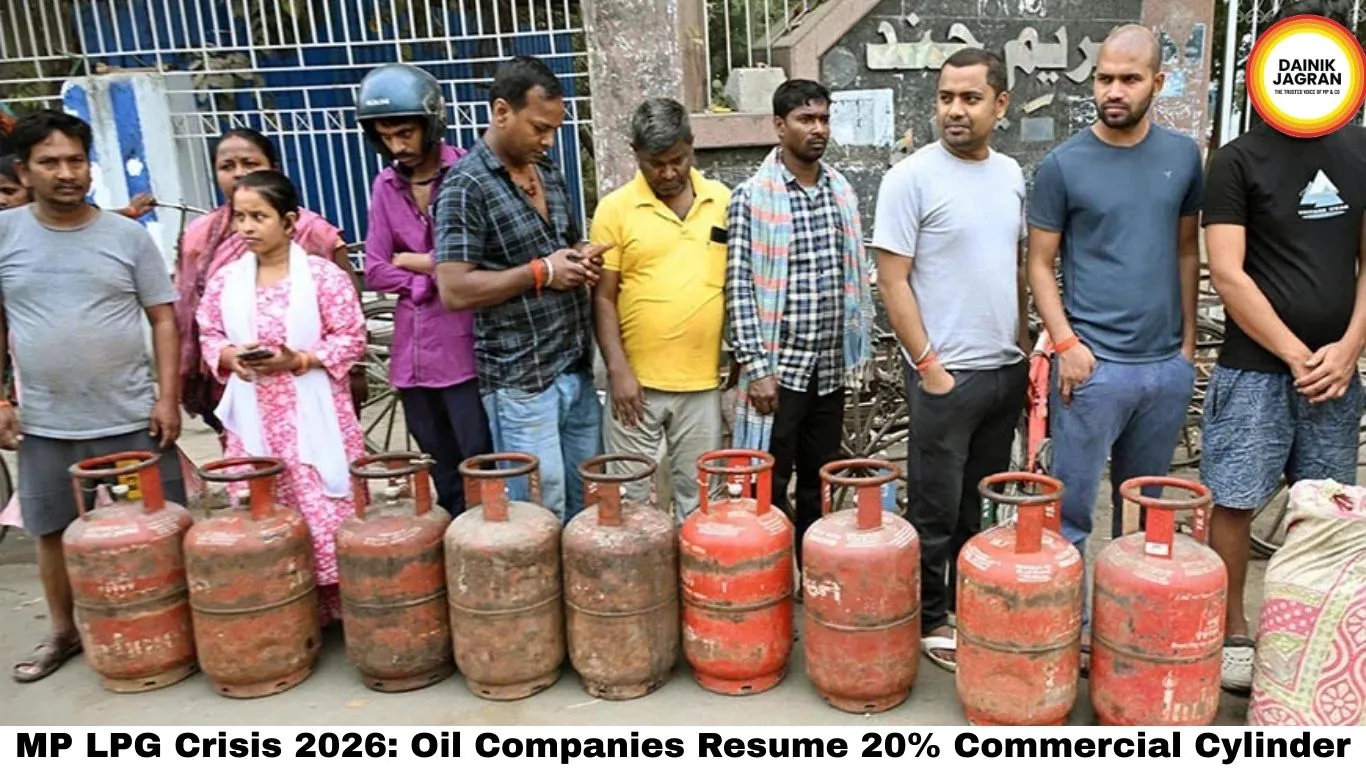
MP LPG Crisis 2026: Oil Companies Resume 20% Commercial Cylinder Supply in Bhopal — Relief for Hotels, But Black Marketing Fears Loom Large
Digital Desk
After nearly a week of paralysis, oil companies have resumed the supply of commercial LPG cylinders in Madhya Pradesh — but with a critical catch. Businesses will receive only 20% of their average monthly requirement, a partial restoration that has brought limited relief to the state's battered hospitality sector while simultaneously raising alarm about a fresh wave of domestic cylinder black marketing.
How the Crisis Began: A War in the Gulf, Empty Kitchens in MP
The origins of Madhya Pradesh's LPG emergency lie not in Bhopal, but in the Strait of Hormuz — the narrow waterway through which nearly 20% of the world's energy cargo flows. When the US-Israel-Iran conflict escalated on February 28, 2026, and Iran effectively closed the strait to traffic, the consequences cascaded swiftly through India's energy supply chain. India imports approximately 62% of its LPG, making it acutely vulnerable to any disruption in Gulf supply routes.
By March 9–10, 2026, the impact had reached MP in full force. Commercial LPG cylinder distribution was temporarily stopped in Bhopal, with exemptions granted only to hospitals and educational institutions. ANI News The booking period for domestic cylinders was simultaneously extended from 21 to 25 days, and online booking servers crashed under the volume of panicked users — pushing wait times to 7–8 days in Bhopal and Indore.
The Human Cost: Hotels Dark, Weddings in Crisis, Gig Workers Hit
The shutdown of commercial supply triggered an immediate crisis across MP's food and hospitality ecosystem. Over 50,000 hotels and restaurants in the state faced the prospect of running out of gas, with the Bhopal Hotel Association reporting four consecutive days of zero commercial cylinder supply at the peak of the disruption.
Wedding caterers scrambled for alternatives — induction cooktops, firewood, kerosene — none of which could scale efficiently for feeding hundreds of guests at events booked months earlier at fixed prices. Food delivery orders on platforms like Zomato and Swiggy reportedly fell by 50–60%, dealing a direct blow to gig workers across the state. Meanwhile, induction cooker sales in Bhopal surged sevenfold and prices doubled almost overnight.
Prices also spiked sharply. As of March 11, 2026, the domestic 14.2 kg cylinder price in Bhopal stood at ₹918.50 — a ₹60 jump from February — while the commercial 19 kg cylinder rose to ₹1,889.00, up ₹144 from the previous month. Vanguard News
The Government's Response: LPG Control Order and 20% Quota
The Central government moved on multiple fronts to manage the crisis. An LPG Control Order issued on March 8, 2026 directed all refineries to maximise LPG yields and channel their entire output of C3 and C4 hydrocarbon streams exclusively to the three Oil Marketing Companies for domestic cooking gas — boosting LPG production by 28% in five days. International Bar Association
The environment ministry also allowed commercial establishments to use alternative fuels — biomass, coal, and kerosene — for one month as a stopgap measure. The petroleum ministry announced active diversification of energy procurement, increasing imports from the US, Norway, Canada, Algeria, and Russia to reduce dependence on Gulf supply.
At the state level, MP Civil Supplies and Consumer Protection Minister Govind Singh Rajput said the state has adequate stocks of petrol, diesel, and domestic gas cylinders, directing all district collectors to prevent hoarding and black marketing at the distributor level. Coconuts
The latest step — allowing Oil Marketing Companies to release 20% of the average monthly commercial LPG requirement to businesses — represents the most tangible relief measure yet for the hospitality trade.
Relief Arrives, But New Fears Surface
The partial resumption of commercial supply has been cautiously welcomed by the hotel and restaurant industry. However, it has simultaneously triggered concern among domestic consumers and trade observers about the risk of black marketing.
Hotels Association president Tejkul Pal Singh Pali acknowledged that the 20% allocation places greater responsibility on Food and Civil Supplies officials to check black marketing of gas cylinders, admitting there is a real possibility of malpractice following the partial resumption. Daily Post Nigeria
The concern is specific: street food vendors and small commercial operators — who shut their outlets when commercial LPG was banned — may now use a single commercial cylinder as a cover to continue sourcing cheaper domestic cylinders illegally. MP Petrol Pumps Dealers Association president Ajay Singh warned that vendors could use one commercial cylinder to avoid inspection while supplying domestic LPG illegally to commercial use. Daily Post Nigeria
LPG distributor RK Gupta struck a more measured note, saying large hoteliers are unlikely to engage in black marketing given reputational stakes, while urging better coordination between the Central and state governments for proper implementation of the 20% relaxation.
What Needs to Happen Next
The 20% commercial quota is a tourniquet, not a cure. With the Strait of Hormuz still disrupted and India's LPG import dependency unchanged, the structural vulnerability that this crisis has exposed remains firmly in place. Authorities must now walk a difficult line: restoring enough commercial supply to keep MP's food economy functioning, while preventing the black market diversion of domestic cylinders that would hurt the state's most economically vulnerable households.
The government says India has 12–16 weeks of LPG stock in reserve. For the hotels, caterers, street vendors, and gig workers of Madhya Pradesh, that number is cold comfort until their gas agencies are fully stocked and their stoves are lit again.
.jpg)




