Europe Heatwave 2026: Rhine Disruption, Nuclear Cuts and Economic Impact

Digital desk

Europe Heatwave 2026: Rhine Disruption, Nuclear Cuts and Economic Impact

Europe’s 2026 heatwave is disrupting Rhine transport, nuclear power, agriculture and tourism, with extreme heat potentially costing the EU €180 billion.

Europe’s prolonged summer heat is increasingly turning into an economic challenge, disrupting river transport, electricity generation, agriculture and tourism while raising concerns over food and energy costs.

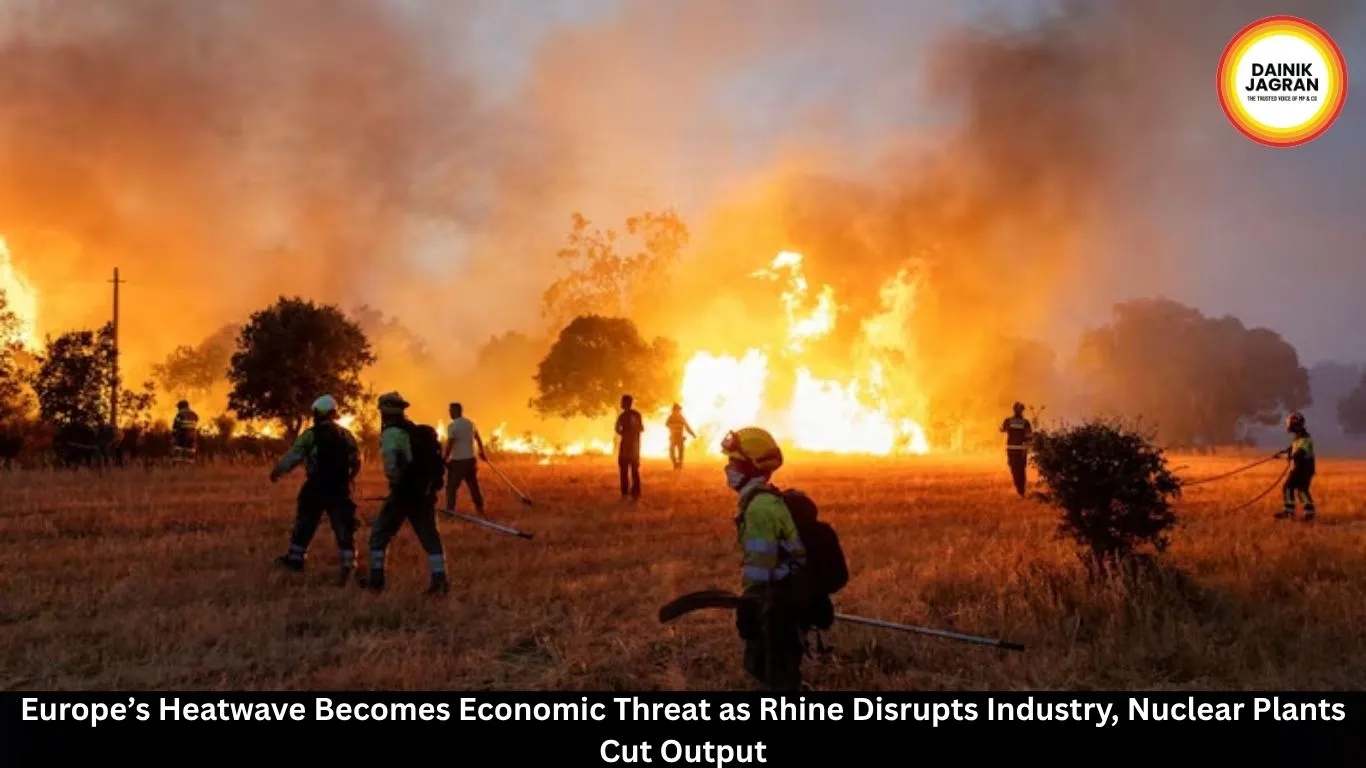
Five heatwaves have swept across Europe this summer, with record temperatures, prolonged drought and wildfires putting pressure on critical infrastructure and businesses.

Dutch bank Triodos estimates that extreme heat could cost the European Union around €180 billion (approximately 8 billion) in 2026, equivalent to about 1 per cent of the bloc’s GDP. The estimate comes as the EU is expected to grow by only around 1.1 per cent this year.

Also Read... El Niño Drought Reveals Submerged Indonesian Village Beneath Karian Dam

The impact is particularly significant as Europe is already dealing with high energy costs, weak industrial activity, US tariffs and growing competition from China.

Also Read... India Nearly Doubles Proposed Coal Mine Capacity to 638 MTPA: GEM Report

Rhine Disrupts German Industry

The Rhine has emerged as one of the clearest examples of how extreme weather is affecting Europe’s economy.

Also Read... Mission Mausam: India Strengthens Weather Forecasting with AI and Advanced Technology

The river is a major transport corridor for Germany, carrying chemicals, fuels, raw materials and other industrial products. But prolonged drought has pushed water levels lower, forcing barges to reduce their loads.

Some companies are shifting shipments from waterways to road and rail, increasing transportation costs and creating additional pressure on industrial supply chains.

The Rhine is not alone. Other major European waterways, including parts of the Danube, are also experiencing low water levels after months of limited rainfall.

Nuclear Power Faces Cooling Problems

Europe’s electricity sector is facing another unusual consequence of extreme heat: inadequate cooling water for nuclear power plants.

France generates more than two-thirds of its electricity from nuclear power. Several of its reactors rely on river water for cooling, leaving them vulnerable when river temperatures become too high or water levels fall.

EDF expected up to 15 per cent of its nuclear fleet to be offline during the latest heatwave.

Romania has faced similar difficulties. Nuclearelectrica began disconnecting its sole operational reactor at the Cernavoda nuclear plant after the Danube reached critically low levels. The country has also declared an energy emergency for August and urged households and businesses to voluntarily reduce electricity consumption.

Hungary’s Paks nuclear plant has also reduced output because of high temperatures and low Danube water levels.

Electricity Demand Moves Higher

The heatwave is creating pressure on both sides of Europe’s power market.

As temperatures rise, households, offices, shops and factories increase their use of air conditioning and other cooling systems. Electricity demand therefore rises at the same time that some nuclear and hydropower facilities face difficulties maintaining normal output.

French electricity prices have risen as traders anticipated reduced nuclear generation.

If nuclear and hydropower output remains constrained, European countries may need to depend more heavily on gas-fired power plants or electricity imports. This could keep power prices elevated and increase operating costs for energy-intensive industries.

Gas Storage Faces Pressure

The heatwave also comes at a difficult time for Europe’s energy security.

European gas storage levels are relatively low for this point in the year, while geopolitical tensions have contributed to uncertainty around LNG supplies.

Higher electricity demand during the summer could increase gas consumption if nuclear generation falls. That could make it more expensive for European countries to refill storage facilities ahead of winter.

The immediate concern is not necessarily a shortage of gas, but the possibility that rebuilding reserves will become more expensive.

Higher energy procurement costs could eventually affect electricity and heating bills for households while increasing expenses for businesses.

Agriculture Takes Major Hit

Agriculture is among the sectors facing the most direct damage from extreme heat and drought.

High temperatures are reducing soil moisture, stressing crops and accelerating harvesting. European agricultural monitoring has reported growing stress in several summer crops, while production estimates for crops such as maize and sunflower have been reduced.

The effects can spread across the food supply chain.

Lower cereal production can increase the cost of animal feed, raising expenses for meat, dairy and egg producers. A weaker harvest could also increase Europe’s dependence on imports.

If several agricultural regions experience poor harvests simultaneously, global supplies could tighten, potentially pushing food prices higher.

Southern Europe Under Pressure

Southern European economies are particularly exposed because agriculture, tourism and outdoor employment play an important role in countries such as Italy, Spain and Greece.

Prolonged heat and drought are affecting crops including cereals, tomatoes, grapes and olives.

Tourism could also face a longer-term impact. Temperatures approaching or exceeding 40°C can make sightseeing and outdoor activities difficult, potentially encouraging tourists to shift their holidays towards spring or autumn.

Such a change could affect traditional summer tourism patterns in southern Europe while creating opportunities for cooler destinations in northern Europe.

Workers Lose Productive Hours

Extreme heat is also affecting labour productivity.

Construction workers, agricultural labourers, logistics employees and others who work outdoors face particularly difficult conditions. Businesses may need to introduce longer breaks or shorter working hours during the hottest part of the day.

Farmers in parts of Europe have already adjusted their schedules to work during cooler early-morning hours.

While such measures allow operations to continue, they can increase labour and operating costs. Across the broader economy, fewer productive working hours can translate into lower overall output.

Wildfires Add Economic Costs

Drought and high temperatures have also increased wildfire risks across southern Europe.

Spain has been among the countries badly affected, with large areas damaged by fires, according to EU Copernicus monitoring.

Wildfires create immediate costs through firefighting, evacuations and emergency response. They also cause longer-term damage to homes, farms, forests and infrastructure.

Transport and tourism can be disrupted, while governments and insurers face additional financial liabilities.

For European governments already dealing with pressure on public finances, repeated climate-related emergencies could mean higher spending at a time when budgets are also being stretched by defence, energy security and the green transition.

€180 Billion Warning

The estimated €180-billion economic impact highlights how extreme weather can develop into a broader macroeconomic problem.

Lower labour productivity is expected to account for a significant share of the economic losses, followed by agriculture, energy and transport.

The costs could continue even after temperatures return to normal.

Businesses may have to invest in cooling systems, alternative transport arrangements and climate-resilient infrastructure. Governments may need to strengthen power grids, water networks and emergency-response systems, while farmers could require new irrigation methods and more heat-resistant crops.

The European Commission has estimated that EU countries may need to spend around €70 billion annually through 2050 on climate adaptation.

Europe Faces a Long-Term Challenge

The summer heatwave has demonstrated how extreme weather can trigger disruptions across several parts of an economy simultaneously.

Low water levels are affecting the Rhine and Danube. Nuclear plants face cooling constraints. Electricity demand is rising. Farmers are confronting crop stress. Workers are losing productive hours, while wildfires are increasing costs for governments, insurers and businesses.

Ultimately, these pressures can reach consumers through higher food, energy and transport costs.

For Europe, the challenge is no longer simply dealing with individual days of extreme heat. It is preparing infrastructure, businesses and public finances for a climate in which heatwaves, drought and wildfires could become more frequent and economically disruptive.

The summer of 2026 is therefore emerging as a warning that a climate shock can begin with temperatures and rainfall but eventually affect economic growth, prices, industrial production and household budgets.


 

english.dainikjagranmpcg.com
17 Aug 2026 By Abhishek Joshi

Europe Heatwave 2026: Rhine Disruption, Nuclear Cuts and Economic Impact

Digital desk

Europe’s prolonged summer heat is increasingly turning into an economic challenge, disrupting river transport, electricity generation, agriculture and tourism while raising concerns over food and energy costs.

Five heatwaves have swept across Europe this summer, with record temperatures, prolonged drought and wildfires putting pressure on critical infrastructure and businesses.

Dutch bank Triodos estimates that extreme heat could cost the European Union around €180 billion (approximately $208 billion) in 2026, equivalent to about 1 per cent of the bloc’s GDP. The estimate comes as the EU is expected to grow by only around 1.1 per cent this year.

The impact is particularly significant as Europe is already dealing with high energy costs, weak industrial activity, US tariffs and growing competition from China.

Rhine Disrupts German Industry

The Rhine has emerged as one of the clearest examples of how extreme weather is affecting Europe’s economy.

The river is a major transport corridor for Germany, carrying chemicals, fuels, raw materials and other industrial products. But prolonged drought has pushed water levels lower, forcing barges to reduce their loads.

Some companies are shifting shipments from waterways to road and rail, increasing transportation costs and creating additional pressure on industrial supply chains.

The Rhine is not alone. Other major European waterways, including parts of the Danube, are also experiencing low water levels after months of limited rainfall.

Nuclear Power Faces Cooling Problems

Europe’s electricity sector is facing another unusual consequence of extreme heat: inadequate cooling water for nuclear power plants.

France generates more than two-thirds of its electricity from nuclear power. Several of its reactors rely on river water for cooling, leaving them vulnerable when river temperatures become too high or water levels fall.

EDF expected up to 15 per cent of its nuclear fleet to be offline during the latest heatwave.

Romania has faced similar difficulties. Nuclearelectrica began disconnecting its sole operational reactor at the Cernavoda nuclear plant after the Danube reached critically low levels. The country has also declared an energy emergency for August and urged households and businesses to voluntarily reduce electricity consumption.

Hungary’s Paks nuclear plant has also reduced output because of high temperatures and low Danube water levels.

Electricity Demand Moves Higher

The heatwave is creating pressure on both sides of Europe’s power market.

As temperatures rise, households, offices, shops and factories increase their use of air conditioning and other cooling systems. Electricity demand therefore rises at the same time that some nuclear and hydropower facilities face difficulties maintaining normal output.

French electricity prices have risen as traders anticipated reduced nuclear generation.

If nuclear and hydropower output remains constrained, European countries may need to depend more heavily on gas-fired power plants or electricity imports. This could keep power prices elevated and increase operating costs for energy-intensive industries.

Gas Storage Faces Pressure

The heatwave also comes at a difficult time for Europe’s energy security.

European gas storage levels are relatively low for this point in the year, while geopolitical tensions have contributed to uncertainty around LNG supplies.

Higher electricity demand during the summer could increase gas consumption if nuclear generation falls. That could make it more expensive for European countries to refill storage facilities ahead of winter.

The immediate concern is not necessarily a shortage of gas, but the possibility that rebuilding reserves will become more expensive.

Higher energy procurement costs could eventually affect electricity and heating bills for households while increasing expenses for businesses.

Agriculture Takes Major Hit

Agriculture is among the sectors facing the most direct damage from extreme heat and drought.

High temperatures are reducing soil moisture, stressing crops and accelerating harvesting. European agricultural monitoring has reported growing stress in several summer crops, while production estimates for crops such as maize and sunflower have been reduced.

The effects can spread across the food supply chain.

Lower cereal production can increase the cost of animal feed, raising expenses for meat, dairy and egg producers. A weaker harvest could also increase Europe’s dependence on imports.

If several agricultural regions experience poor harvests simultaneously, global supplies could tighten, potentially pushing food prices higher.

Southern Europe Under Pressure

Southern European economies are particularly exposed because agriculture, tourism and outdoor employment play an important role in countries such as Italy, Spain and Greece.

Prolonged heat and drought are affecting crops including cereals, tomatoes, grapes and olives.

Tourism could also face a longer-term impact. Temperatures approaching or exceeding 40°C can make sightseeing and outdoor activities difficult, potentially encouraging tourists to shift their holidays towards spring or autumn.

Such a change could affect traditional summer tourism patterns in southern Europe while creating opportunities for cooler destinations in northern Europe.

Workers Lose Productive Hours

Extreme heat is also affecting labour productivity.

Construction workers, agricultural labourers, logistics employees and others who work outdoors face particularly difficult conditions. Businesses may need to introduce longer breaks or shorter working hours during the hottest part of the day.

Farmers in parts of Europe have already adjusted their schedules to work during cooler early-morning hours.

While such measures allow operations to continue, they can increase labour and operating costs. Across the broader economy, fewer productive working hours can translate into lower overall output.

Wildfires Add Economic Costs

Drought and high temperatures have also increased wildfire risks across southern Europe.

Spain has been among the countries badly affected, with large areas damaged by fires, according to EU Copernicus monitoring.

Wildfires create immediate costs through firefighting, evacuations and emergency response. They also cause longer-term damage to homes, farms, forests and infrastructure.

Transport and tourism can be disrupted, while governments and insurers face additional financial liabilities.

For European governments already dealing with pressure on public finances, repeated climate-related emergencies could mean higher spending at a time when budgets are also being stretched by defence, energy security and the green transition.

€180 Billion Warning

The estimated €180-billion economic impact highlights how extreme weather can develop into a broader macroeconomic problem.

Lower labour productivity is expected to account for a significant share of the economic losses, followed by agriculture, energy and transport.

The costs could continue even after temperatures return to normal.

Businesses may have to invest in cooling systems, alternative transport arrangements and climate-resilient infrastructure. Governments may need to strengthen power grids, water networks and emergency-response systems, while farmers could require new irrigation methods and more heat-resistant crops.

The European Commission has estimated that EU countries may need to spend around €70 billion annually through 2050 on climate adaptation.

Europe Faces a Long-Term Challenge

The summer heatwave has demonstrated how extreme weather can trigger disruptions across several parts of an economy simultaneously.

Low water levels are affecting the Rhine and Danube. Nuclear plants face cooling constraints. Electricity demand is rising. Farmers are confronting crop stress. Workers are losing productive hours, while wildfires are increasing costs for governments, insurers and businesses.

Ultimately, these pressures can reach consumers through higher food, energy and transport costs.

For Europe, the challenge is no longer simply dealing with individual days of extreme heat. It is preparing infrastructure, businesses and public finances for a climate in which heatwaves, drought and wildfires could become more frequent and economically disruptive.

The summer of 2026 is therefore emerging as a warning that a climate shock can begin with temperatures and rainfall but eventually affect economic growth, prices, industrial production and household budgets.
 

https://english.dainikjagranmpcg.com/international/europe-heatwave-2026-rhine-disruption-nuclear-cuts-and-economic-impact/article-26465

--------

🚨 Beat the News Rush – Join Now!

Get breaking alerts, hot exclusives, and game-changing stories instantly on your phone. No delays, no fluff – just the edge you need. ⚡

Tap to join: 

🟢 WhatsApp Channel: Dainik Jagran MP CG

Crave more?

🅕 Facebook: Dainik Jagran MP CG English

🅧 Twitter (X): Dainik Jagran MP CG

🅘 Instagram: Dainik Jagran MP CG

Share the fire – keep your crew ahead! 🗞️🔥

Trending News