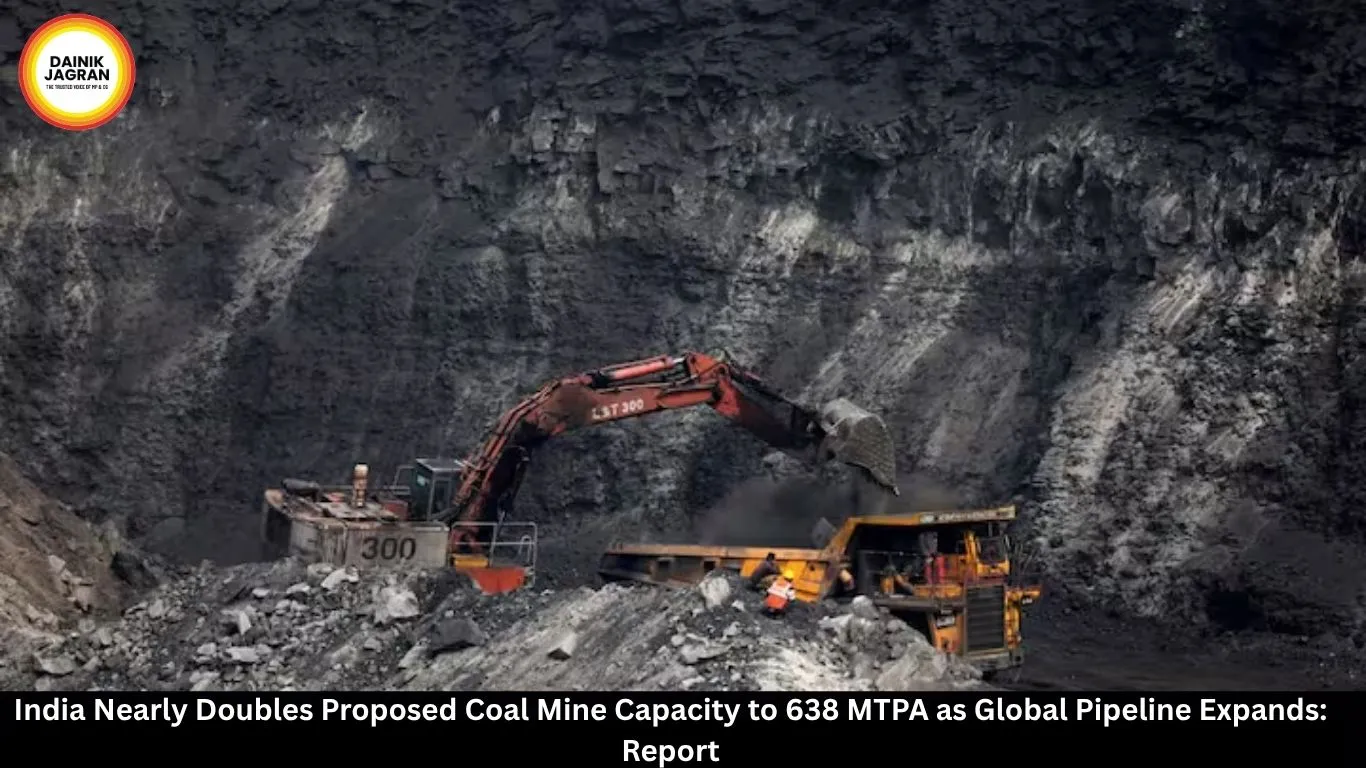
India Nearly Doubles Proposed Coal Mine Capacity to 638 MTPA: GEM Report

Digital desk

India Nearly Doubles Proposed Coal Mine Capacity to 638 MTPA: GEM Report

India's proposed coal mining capacity nearly doubled to 638 MTPA in 2025, driving global coal pipeline growth despite slowing demand and rapid renewable expansion.

India nearly doubled its proposed coal mining capacity in 2025, pushing the country's planned capacity to 638 million tonnes per annum (MTPA) from 329 MTPA a year earlier, according to data from Global Energy Monitor (GEM).

The increase of around 94 per cent made India the biggest contributor to the expansion of the global pipeline of proposed coal mining projects. Globally, proposed coal mine capacity rose by about 11 per cent year-on-year to 2,521 MTPA in 2025.

The figures come as India continues to expand renewable energy capacity while relying heavily on coal to meet rising electricity demand and reduce dependence on imported fuel.

Also Read... Beyond Strategic Petroleum Reserves: Why India Needs Real Energy Resilience

India Drives Global Increase

GEM's latest research identified 837 coal mine proposals worldwide, representing an increase of nearly 12 per cent from 2024.

Also Read... UPI Will Remain Free, Sitharaman Says as Parliament Passes Tax Amendment Bill

The data is based on GEM's Global Coal Mine Tracker, which monitors coal projects at different stages, including proposed, permitted, under construction and operating mines.

Also Read... El Niño Drought Reveals Submerged Indonesian Village Beneath Karian Dam

India accounted for the largest share of the increase in proposed global coal mining capacity. The expansion is linked to efforts to increase domestic coal production, support electricity generation and industrial activity, and strengthen energy security.

A large portion of India's proposed mining capacity is concentrated in coal-rich states such as Jharkhand and Odisha, which have extensive reserves and established mining infrastructure.

Coal Remains Key to Power

Despite rapid growth in renewable energy, coal remains a major source of electricity generation in India.

Coal-fired power plants continue to provide baseload electricity and help meet periods of high demand when renewable generation is unavailable or fluctuates.

India's electricity consumption is also expected to grow rapidly over the coming years. According to the International Energy Agency (IEA), electricity demand in the country is projected to increase by an average of around 6.4 per cent annually through 2030.

Renewable energy is expected to meet a substantial portion of additional electricity demand, but coal is still projected to contribute significantly to the remaining requirement.

Global Coal Pipeline Expands

The increase in India's proposed capacity comes against a broader expansion in planned coal mining worldwide.

China, India, Australia, Russia and South Africa account for more than 90 per cent of proposed global coal mining capacity, according to GEM.

China alone accounts for around 1,329 MTPA, making it the largest contributor to the global pipeline.

Thermal coal intended for power generation accounts for roughly 70 per cent of proposed capacity, while metallurgical coal used in steel production is becoming an increasingly important part of new mining plans.

New Mine Openings Decline

GEM's data also shows a contrasting trend. While proposed capacity has increased, the amount of new coal mining capacity being opened has declined.

New mine capacity openings have fallen by more than 50 per cent since 2024, even as around 700 MTPA of capacity remains under construction globally.

Once completed, these projects could support coal production for decades, raising concerns about whether some mines could become financially unviable as energy systems shift towards lower-carbon sources.

Coal Demand Outlook

The IEA expects India to remain one of the world's major drivers of coal demand growth through 2030.

Its Coal 2025 outlook projects Indian coal demand to increase by an average of around 3 per cent annually, adding more than 200 million tonnes of demand by 2030.

Globally, however, the outlook is different. The IEA expects coal demand to plateau during the middle of the decade and gradually decline by 2030 as renewable energy, nuclear power and natural gas take a larger share of electricity generation.

Global coal consumption in 2030 is projected to be around 3 per cent lower than 2025 levels.

Energy Security vs Climate Goals

India's expanding coal mining pipeline highlights the challenge of balancing energy security with long-term climate objectives.

The country is rapidly increasing renewable generation capacity, but electricity demand is growing at a pace that makes coal difficult to phase out quickly.

Domestic coal production is therefore being expanded to ensure adequate fuel availability for power plants and reduce exposure to international coal prices and supply disruptions.

At the same time, a large expansion of mining capacity could create financial risks if coal demand grows more slowly than expected.

Risk of Future Overcapacity

The difference between planned mining capacity and long-term demand projections could become an important issue for the global coal industry.

If renewable energy deployment accelerates faster than expected, or if coal demand begins declining earlier, some proposed mines could struggle to find buyers or operate profitably.

For India, the immediate priority remains ensuring reliable electricity and supporting economic growth. But the scale of the proposed coal pipeline also means future investment decisions will need to account for changing energy markets and the country's long-term transition towards cleaner sources.


 

english.dainikjagranmpcg.com
13 Aug 2026 By Abhishek Joshi

India Nearly Doubles Proposed Coal Mine Capacity to 638 MTPA: GEM Report

Digital desk

India nearly doubled its proposed coal mining capacity in 2025, pushing the country's planned capacity to 638 million tonnes per annum (MTPA) from 329 MTPA a year earlier, according to data from Global Energy Monitor (GEM).

The increase of around 94 per cent made India the biggest contributor to the expansion of the global pipeline of proposed coal mining projects. Globally, proposed coal mine capacity rose by about 11 per cent year-on-year to 2,521 MTPA in 2025.

The figures come as India continues to expand renewable energy capacity while relying heavily on coal to meet rising electricity demand and reduce dependence on imported fuel.

India Drives Global Increase

GEM's latest research identified 837 coal mine proposals worldwide, representing an increase of nearly 12 per cent from 2024.

The data is based on GEM's Global Coal Mine Tracker, which monitors coal projects at different stages, including proposed, permitted, under construction and operating mines.

India accounted for the largest share of the increase in proposed global coal mining capacity. The expansion is linked to efforts to increase domestic coal production, support electricity generation and industrial activity, and strengthen energy security.

A large portion of India's proposed mining capacity is concentrated in coal-rich states such as Jharkhand and Odisha, which have extensive reserves and established mining infrastructure.

Coal Remains Key to Power

Despite rapid growth in renewable energy, coal remains a major source of electricity generation in India.

Coal-fired power plants continue to provide baseload electricity and help meet periods of high demand when renewable generation is unavailable or fluctuates.

India's electricity consumption is also expected to grow rapidly over the coming years. According to the International Energy Agency (IEA), electricity demand in the country is projected to increase by an average of around 6.4 per cent annually through 2030.

Renewable energy is expected to meet a substantial portion of additional electricity demand, but coal is still projected to contribute significantly to the remaining requirement.

Global Coal Pipeline Expands

The increase in India's proposed capacity comes against a broader expansion in planned coal mining worldwide.

China, India, Australia, Russia and South Africa account for more than 90 per cent of proposed global coal mining capacity, according to GEM.

China alone accounts for around 1,329 MTPA, making it the largest contributor to the global pipeline.

Thermal coal intended for power generation accounts for roughly 70 per cent of proposed capacity, while metallurgical coal used in steel production is becoming an increasingly important part of new mining plans.

New Mine Openings Decline

GEM's data also shows a contrasting trend. While proposed capacity has increased, the amount of new coal mining capacity being opened has declined.

New mine capacity openings have fallen by more than 50 per cent since 2024, even as around 700 MTPA of capacity remains under construction globally.

Once completed, these projects could support coal production for decades, raising concerns about whether some mines could become financially unviable as energy systems shift towards lower-carbon sources.

Coal Demand Outlook

The IEA expects India to remain one of the world's major drivers of coal demand growth through 2030.

Its Coal 2025 outlook projects Indian coal demand to increase by an average of around 3 per cent annually, adding more than 200 million tonnes of demand by 2030.

Globally, however, the outlook is different. The IEA expects coal demand to plateau during the middle of the decade and gradually decline by 2030 as renewable energy, nuclear power and natural gas take a larger share of electricity generation.

Global coal consumption in 2030 is projected to be around 3 per cent lower than 2025 levels.

Energy Security vs Climate Goals

India's expanding coal mining pipeline highlights the challenge of balancing energy security with long-term climate objectives.

The country is rapidly increasing renewable generation capacity, but electricity demand is growing at a pace that makes coal difficult to phase out quickly.

Domestic coal production is therefore being expanded to ensure adequate fuel availability for power plants and reduce exposure to international coal prices and supply disruptions.

At the same time, a large expansion of mining capacity could create financial risks if coal demand grows more slowly than expected.

Risk of Future Overcapacity

The difference between planned mining capacity and long-term demand projections could become an important issue for the global coal industry.

If renewable energy deployment accelerates faster than expected, or if coal demand begins declining earlier, some proposed mines could struggle to find buyers or operate profitably.

For India, the immediate priority remains ensuring reliable electricity and supporting economic growth. But the scale of the proposed coal pipeline also means future investment decisions will need to account for changing energy markets and the country's long-term transition towards cleaner sources.

 

https://english.dainikjagranmpcg.com/national/india-nearly-doubles-proposed-coal-mine-capacity-to-638-mtpa/article-25876

--------

🚨 Beat the News Rush – Join Now!

Get breaking alerts, hot exclusives, and game-changing stories instantly on your phone. No delays, no fluff – just the edge you need. ⚡

Tap to join: 

🟢 WhatsApp Channel: Dainik Jagran MP CG

Crave more?

🅕 Facebook: Dainik Jagran MP CG English

🅧 Twitter (X): Dainik Jagran MP CG

🅘 Instagram: Dainik Jagran MP CG

Share the fire – keep your crew ahead! 🗞️🔥

Trending News