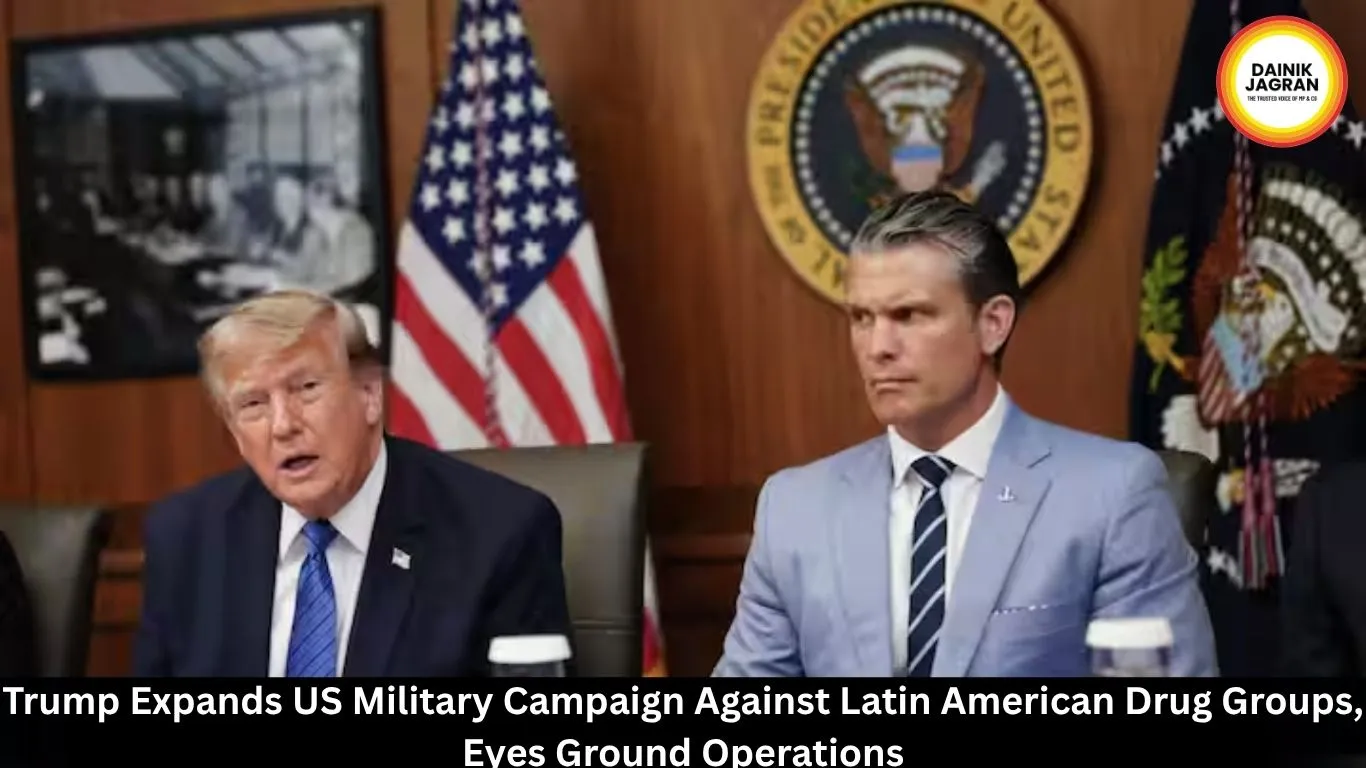
Trump Expands US Military Campaign Against Latin American Drug Groups

Digital desk

Trump Expands US Military Campaign Against Latin American Drug Groups

The Trump administration is seeking to expand its anti-drug campaign from suspected boat strikes to joint land operations with Latin American militaries, raising sovereignty concerns.

The Donald Trump administration is expanding its military campaign against drug trafficking networks in Latin America, moving beyond strikes on suspected drug-smuggling boats and exploring joint operations with regional militaries against criminal groups on land.

The proposed shift could mark a significant escalation in Washington's security policy in the Western Hemisphere and is likely to test how much direct US military involvement governments across Latin America are prepared to accept.

From Boat Strikes to Land

The United States has carried out more than 60 strikes against suspected drug boats in the Caribbean and eastern Pacific, with more than 200 people reportedly killed in the operations.

Also Read... Ford to Shift Lincoln Production From China to US From 2030 Amid Tariff War

The Trump administration has accused the targeted vessels of transporting drugs and linked their crews to organisations it describes as “narco-terrorist” groups.

Also Read... Iran State Media Mocks Trump Over Secret Plane Switch During Turkey Visit

The boat campaign has drawn criticism over the evidence made public by Washington and questions surrounding the legality of the strikes.

Also Read... Gulf States Uneasy With Trump’s Iran Strategy as Strait of Hormuz Talks Stall

The administration now wants to extend a similar approach to land-based targets, potentially involving US personnel alongside Latin American forces.

Hegseth Names Four Countries

US Defence Secretary Pete Hegseth said Colombia, Ecuador, Guatemala and Honduras were among the countries working with Washington on military operations against organised criminal groups.

Hegseth made the remarks during a military exercise in Panama and said the US wanted to apply the approach used against suspected drug boats to criminal targets on land.

However, the statement has already faced pushback. Guatemala has denied agreeing to joint military operations with the United States.

Colombia Could Be Key Test

Colombia could become one of the most important testing grounds for the new strategy.

Hegseth said Colombian President Abelardo de la Espriella had sought greater US military involvement in the fight against armed groups, including the National Liberation Army (ELN).

Direct US support for operations against groups such as the ELN would represent a significant change from Washington's traditional role in Colombia, which has largely involved intelligence, weapons, training and other forms of security assistance.

Military operations in areas populated by civilians could also create additional risks. Armed groups may abandon established camps and move into towns and communities, making them more difficult to target while increasing the possibility of civilian casualties.

Sovereignty Raises Concerns

The biggest challenge for Washington could be political rather than military.

Latin American governments have generally welcomed US intelligence, equipment and training, but allowing American forces to conduct direct combat operations on their territory is considerably more sensitive.

Ecuador has expanded security cooperation with Washington and conducted joint operations, but voters rejected a proposal in a 2025 referendum to permit foreign military bases in the country.

Guatemala has also signalled limits to the proposed strategy. President Bernardo Arévalo has denied agreeing to joint US military operations and said such an arrangement would require congressional approval.

Mexico has similarly resisted allowing US forces to conduct military operations against drug cartels on Mexican territory, despite extensive security cooperation between the two countries.

Trump’s Harder Drug Policy

Since returning to the White House in January 2025, Trump has pursued a tougher approach towards organised crime and drug trafficking in Latin America.

Washington has designated 20 Latin American criminal groups as foreign terrorist organisations and increased military and intelligence cooperation with governments fighting organised crime.

The administration argues that stronger military action is necessary against criminal networks that have become increasingly powerful and violent.

Critics, however, say the expanded campaign could create legal and diplomatic complications, particularly if US forces become directly involved in combat operations outside American territory.

Can Military Force Deliver Results?

The proposed strategy also faces questions about whether military action can permanently weaken drug trafficking networks.

Criminal organisations and armed groups have historically adapted to military pressure. Destroying bases and camps may force fighters and traffickers to relocate rather than eliminate the networks themselves.

There is also a risk that armed groups could move closer to civilian populations, complicating military operations and increasing the potential for civilian casualties.

For Latin American governments, the political calculation is equally difficult. Leaders facing rising crime may welcome US intelligence and equipment, but a visible American military presence could trigger nationalist opposition.

A Broader US Strategy

The expansion of the campaign goes beyond counter-narcotics operations. It also reflects Trump's broader effort to strengthen US influence across the Western Hemisphere.

Washington wants regional governments to cooperate more closely on organised crime, migration, border security and other strategic issues.

Whether Latin American governments agree to deeper military cooperation will determine how far the new strategy can go. For now, the proposed shift from sea-based strikes to land operations represents a major test of both US military policy and regional sovereignty.
 

english.dainikjagranmpcg.com
17 Aug 2026 By Abhishek Joshi

Trump Expands US Military Campaign Against Latin American Drug Groups

Digital desk

The Donald Trump administration is expanding its military campaign against drug trafficking networks in Latin America, moving beyond strikes on suspected drug-smuggling boats and exploring joint operations with regional militaries against criminal groups on land.

The proposed shift could mark a significant escalation in Washington's security policy in the Western Hemisphere and is likely to test how much direct US military involvement governments across Latin America are prepared to accept.

From Boat Strikes to Land

The United States has carried out more than 60 strikes against suspected drug boats in the Caribbean and eastern Pacific, with more than 200 people reportedly killed in the operations.

The Trump administration has accused the targeted vessels of transporting drugs and linked their crews to organisations it describes as “narco-terrorist” groups.

The boat campaign has drawn criticism over the evidence made public by Washington and questions surrounding the legality of the strikes.

The administration now wants to extend a similar approach to land-based targets, potentially involving US personnel alongside Latin American forces.

Hegseth Names Four Countries

US Defence Secretary Pete Hegseth said Colombia, Ecuador, Guatemala and Honduras were among the countries working with Washington on military operations against organised criminal groups.

Hegseth made the remarks during a military exercise in Panama and said the US wanted to apply the approach used against suspected drug boats to criminal targets on land.

However, the statement has already faced pushback. Guatemala has denied agreeing to joint military operations with the United States.

Colombia Could Be Key Test

Colombia could become one of the most important testing grounds for the new strategy.

Hegseth said Colombian President Abelardo de la Espriella had sought greater US military involvement in the fight against armed groups, including the National Liberation Army (ELN).

Direct US support for operations against groups such as the ELN would represent a significant change from Washington's traditional role in Colombia, which has largely involved intelligence, weapons, training and other forms of security assistance.

Military operations in areas populated by civilians could also create additional risks. Armed groups may abandon established camps and move into towns and communities, making them more difficult to target while increasing the possibility of civilian casualties.

Sovereignty Raises Concerns

The biggest challenge for Washington could be political rather than military.

Latin American governments have generally welcomed US intelligence, equipment and training, but allowing American forces to conduct direct combat operations on their territory is considerably more sensitive.

Ecuador has expanded security cooperation with Washington and conducted joint operations, but voters rejected a proposal in a 2025 referendum to permit foreign military bases in the country.

Guatemala has also signalled limits to the proposed strategy. President Bernardo Arévalo has denied agreeing to joint US military operations and said such an arrangement would require congressional approval.

Mexico has similarly resisted allowing US forces to conduct military operations against drug cartels on Mexican territory, despite extensive security cooperation between the two countries.

Trump’s Harder Drug Policy

Since returning to the White House in January 2025, Trump has pursued a tougher approach towards organised crime and drug trafficking in Latin America.

Washington has designated 20 Latin American criminal groups as foreign terrorist organisations and increased military and intelligence cooperation with governments fighting organised crime.

The administration argues that stronger military action is necessary against criminal networks that have become increasingly powerful and violent.

Critics, however, say the expanded campaign could create legal and diplomatic complications, particularly if US forces become directly involved in combat operations outside American territory.

Can Military Force Deliver Results?

The proposed strategy also faces questions about whether military action can permanently weaken drug trafficking networks.

Criminal organisations and armed groups have historically adapted to military pressure. Destroying bases and camps may force fighters and traffickers to relocate rather than eliminate the networks themselves.

There is also a risk that armed groups could move closer to civilian populations, complicating military operations and increasing the potential for civilian casualties.

For Latin American governments, the political calculation is equally difficult. Leaders facing rising crime may welcome US intelligence and equipment, but a visible American military presence could trigger nationalist opposition.

A Broader US Strategy

The expansion of the campaign goes beyond counter-narcotics operations. It also reflects Trump's broader effort to strengthen US influence across the Western Hemisphere.

Washington wants regional governments to cooperate more closely on organised crime, migration, border security and other strategic issues.

Whether Latin American governments agree to deeper military cooperation will determine how far the new strategy can go. For now, the proposed shift from sea-based strikes to land operations represents a major test of both US military policy and regional sovereignty.
 

https://english.dainikjagranmpcg.com/international/6a82e102beb15/article-26467

--------

🚨 Beat the News Rush – Join Now!

Get breaking alerts, hot exclusives, and game-changing stories instantly on your phone. No delays, no fluff – just the edge you need. ⚡

Tap to join: 

🟢 WhatsApp Channel: Dainik Jagran MP CG

Crave more?

🅕 Facebook: Dainik Jagran MP CG English

🅧 Twitter (X): Dainik Jagran MP CG

🅘 Instagram: Dainik Jagran MP CG

Share the fire – keep your crew ahead! 🗞️🔥

Trending News